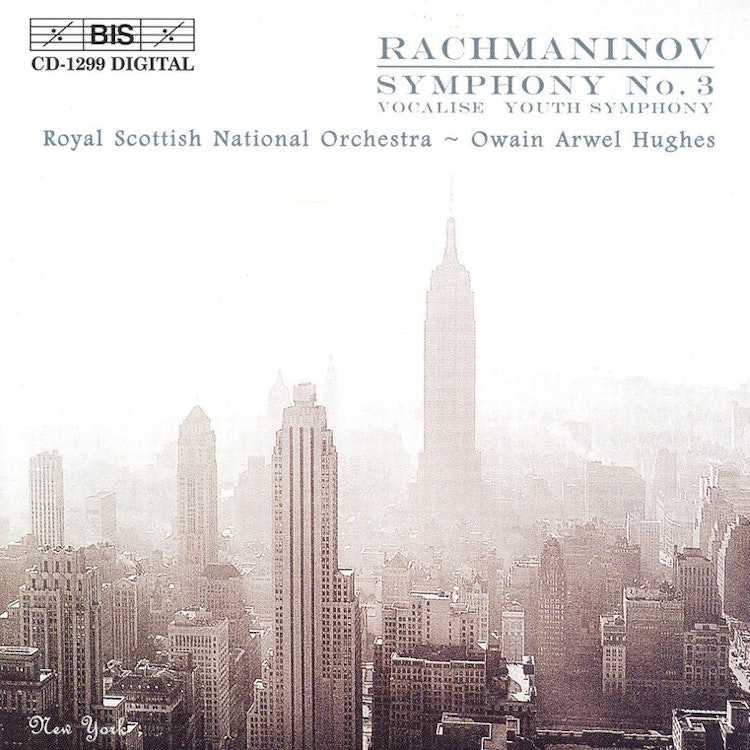
Rachmaninov's Third Symphony uses a motto in small intervals that permeates all movements, similar to a Gregorian repercussio, initiating the listener into the tonal center of A.
Compositional Technique
The slow movement of Rachmaninov's Third Symphony employs harp and celesta to create magical sound worlds, with chromatic harmonies exploring the outer limits of his musical language.
Composer Biography
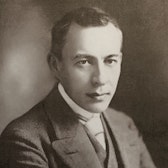
Rachmaninov's career as a composer became secondary to his prowess as a piano virtuoso after the Russian Revolution forced him into exile in America.
Critical Reception
The premiere of Rachmaninov's Third Symphony in 1936, conducted by Leopold Stokowski, was considered 'exemplary' by the composer, but the work was not a success with the public or critics.
Composition History
Rachmaninov completed his Third Symphony in 1936 at his newly built villa 'Senar' by the Vierwaldstättersee, named after 'SErgei and NAtalia Rachmaninov'.
Composer's Artistic Vision
Rachmaninov's 'Vocalise' features a wordless vocal melody, presenting the human voice as a pure 'instrument' and reflecting his joy in unfettered vocal melos.
Performer Biography
Owain Arwel Hughes, the conductor on this album, is known for his advocacy of British composers and for conducting major British orchestras, as well as founding the Welsh Proms festival.
You might also enjoy...
Rimsky-Korsakov: Symphonies Nos. 1 and 3 / Fantasia On Serbian Themes