Rameau / Frescobaldi / Norgard / Bergman: Aspects On Harpsichord
9/30/1996, 16 Tracks, 1:13:29
Featuring
Inger Grudin-Brandt
Eva Nordwall
Camilla Söderberg
Knut Sönstevold
Gunilla von Bahr
Girolamo Frescobaldi
Jean-Philippe Rameau
Arne Mellnäs
Per Nørgård
Erik Bergman
Jan Wilhelm Morthenson
Hans Holewa
Egil Hovland
Did you know?
1/7
Interpretation
Frescobaldi's instructions for his music state that the style of playing should not slavishly follow the beat, allowing for variations in tempo and even momentary stops.
Composition History
Hans Holewa's 'Notturno per gli impulsi' (1976) was influenced by political events of the day, specifically the expulsion of Assyrian refugees from Sweden.
Interpretation
This recording uses mean-tone temperament and early fingering techniques, which distinguished between 'good' and 'bad' fingers and did not typically involve passing the thumb under the fingers.
Compositional Technique
Arne Mellnäs's 'Agréments' (1970) is a piece where the main notes, or 'melodies,' have been removed, leaving only the ornaments, reflecting the French term for ornaments in Baroque music.
Composer Biography
Girolamo Frescobaldi, a giant in keyboard history, was a famous composer, virtuoso, and teacher, whose most illustrious pupil was J.J. Froberger.
Compositional Technique
Per Nørgård's 'Turn' (1973) requires a new fingering technique where each note in a chord figure is given its own duration, creating a 'rhythmic micropolyphony'.
Composer's Artistic Vision
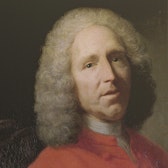
Jean-Philippe Rameau, a French composer, systematized harmony, illustrated the cyclic aspects of keys, and developed a theory of affects by organizing intervals, melodic laws, and keys.
You might also enjoy...
Froberger: Werke für Cembalo
Bach, JS: Keyboard Works
J.S. Bach: Toccatas BWV 910-916
Le Manuscrit de Madame Théobon
J.S. Bach: Complete Edition, Vol. 2/10
Couperin, F. : Suites for Harpsichord Nos. 22, 23, 25 & 26
Bach, J.S:Concertos for 2 Harpsichords / Bach, W.F.: Harpichord Concerto in F Major
Dances with Harpsichords
Mattheson: Suites
Cromatica: The Art of Moving Souls – Works for Harpsichord