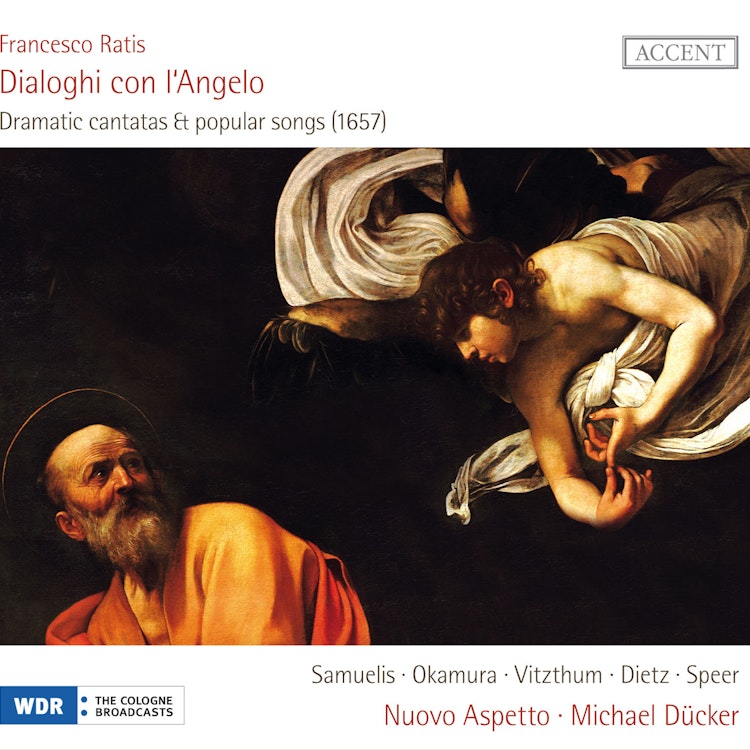
The four dialogues in the collection, featuring Angels, Demons, and Musicians interacting with personified figures like the Soul, World, Conscience, and Flesh, form an independent body of work.
Compositional Technique
All compositions are accompanied by a Spanish guitar, with tablature indicating a chordal execution (rasgueado) where all strings are struck simultaneously.
Composer's Artistic Vision
The Oratory of St. Filippo Neri, where these songs were used, believed that 'What one hears with joy and love, remains steadfast in the spirit', using singing to aid spiritual conversion.
Composition History
The Canzonette spirituali e morali, published anonymously in Milan in 1657, were created at the instigation of members of a confraternity in Chiavenna for 'spiritual recreation'.
Compositional Technique
The polyphonic canzonette are structured with a homophonic choir, a strictly syllabic melody in the soprano, and other parts that can be omitted or reduced to instrumental accompaniment.
Compositional Technique
The collection includes 'spiritual contrafacta', where secular compositions were transformed into sacred ones by replacing their texts, though the Chiavenna collection shows significant melodic and rhythmic deviations from this principle.
Composer Biography
Francesco Ratis, born in Como in the early 17th century, was an organist, priest, and apostolic missionary who lived in Chiavenna for about 30 years.
You might also enjoy...
Codex Martínez Compañón
The Best of the Baltimore Consort
On the Trail of Marco Polo
40 Years DHM - Mythomania (16th Century)
Terpsichore: Renaissance and Early Baroque Dance Music
Gut Wind and Wire
Sinners & Saints: The Ultimate Medieval & Renaissance Music Collection
Ostinato
Pieces of Africa
Serenate Napoletane
English Country Dances - 17th Century Music from the Publications of John Playford
Joculatores Upsalienses: Four Seasons (The)
Mayr: Concertos
Morley, T.: Joyne Hands / Akeroyde, S.: Jenny, My Blithest Maid / Nicholson, R.: the Jewes Dance (Tunes From the Attic)