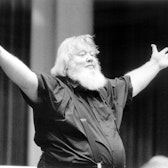
Einojuhani Rautavaara, the composer of these symphonies, viewed his eight symphonies as a "journey through life" or a "voyage of the soul," reflecting his artistic evolution.
Composition History
Rautavaara's Fourth Symphony, 'Arabescata,' was originally a modernist orchestral work from 1962, which he later recast as his Fourth Symphony in 1986, replacing an earlier, unsatisfactory version.
Compositional Technique
Rautavaara's Third Symphony, despite using dodecaphonic technique, evokes German Romanticism with its expansive arcs, majestic sound, German performance instructions, and the inclusion of Wagner tubas.
Cultural Impact
Rautavaara's Seventh Symphony, 'Angel of Light,' brought him considerable international fame and led to a commission from The Philadelphia Orchestra for his Eighth Symphony.
Composition History
Rautavaara revised his First Symphony twice, in 1988 and 2003, stating he wanted to "rewrite my history, rewrite my life" to bring the work's expression into a precise shape.
Composer Biography
Einojuhani Rautavaara's early career began with neo-Classicism, then moved to dodecaphony and Serialism, before synthesizing these techniques with neo-Romanticism in his later works.