Maurice Ravel, a French composer, famously considered the violin and piano to be "essentially incompatible" instruments.
Compositional Technique
For his concert rhapsody Tzigane, Ravel sought technical advice from violinist Hélène Jourdan-Morhange, asking her to play all of Paganini's Twenty-four Caprices to understand violin virtuosity.
Composer Biography
Ravel's composition process was often lengthy and difficult, with him frequently mentioning "le cafard" (the blues) that prevented him from working.
Album & Artwork
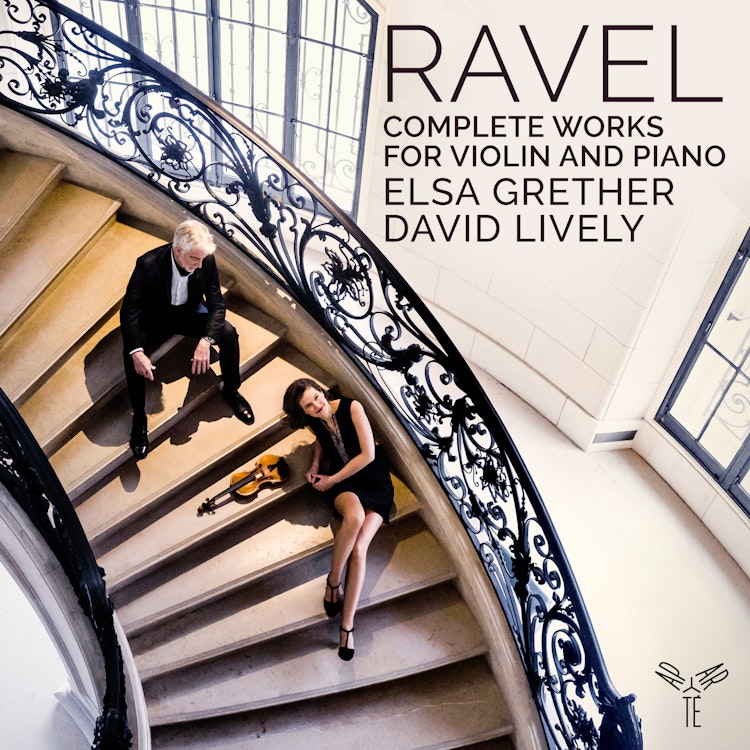
This album presents Maurice Ravel's complete works for violin and piano, along with two world premiere recordings of arrangements.
Composer's Artistic Vision
Ravel considered his Piano Concerto in G major a "divertissement" and a "light piece," as he believed all concertos should be.
Compositional Technique
In his 'Blues' movement, Ravel used a luthéal, an attachment for grand pianos that could produce cimbalom- or harpsichord-like sounds, effectively creating a "prepared piano."
Compositional Technique
Ravel's Berceuse sur le nom de Gabriel Fauré is based on a musical transliteration of the name Gabriel Fauré (GABDBEE FAGDE).
You might also enjoy...
Debussy, Ravel, Jancek: Violin Sonatas
Ange Terrible
Ravel Voyageur
Ravel: The Works for Violin & Piano
Ravel: Complete Music for Violin & Piano
Respighi & Ravel: Violin Sonatas
Debussy / Ravel / Ysaye / Saint-Saens: French Violin Sonatas