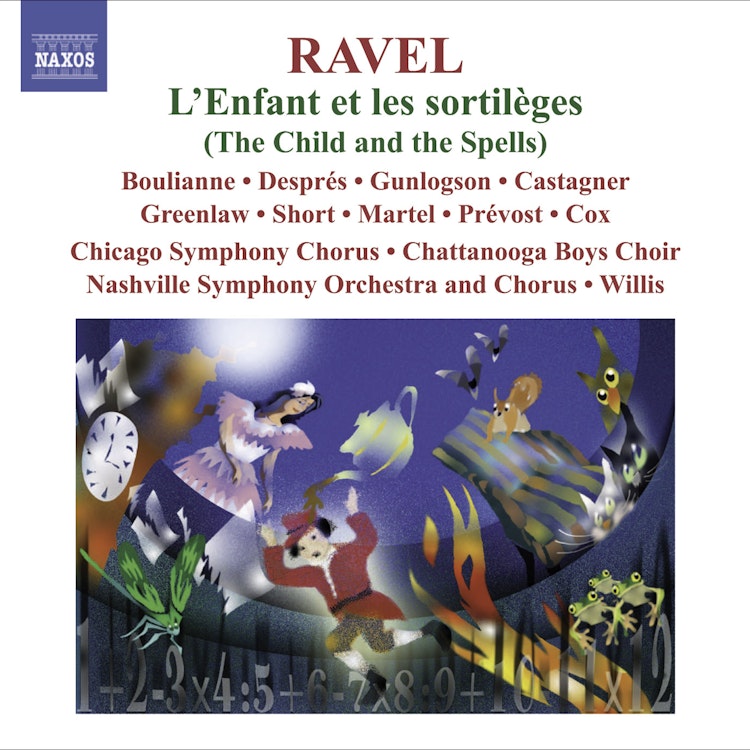
Ravel, M: Enfant Et Les Sortileges (L') [Opera] / Sheherazade
9/30/2009, 28 Tracks, 1:04:11
Featuring
Alastair Willis
Julie Boulianne
Geneviève Couillard Després
Kevin Short
Julie Cox
Ian Greenlaw
Philippe Castagner
Kirsten Gunlogson
Cassandre Prévost
Agathe Martel
Nashville Symphony
Nashville Symphony Chorus
Chicago Symphony Chorus
Chattanooga Boys Choir
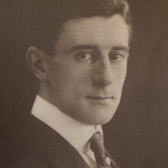
Maurice Ravel
Did you know?
1/7
Compositional Technique
The score of "L'Enfant et les sortilèges" features an extensive and colorful list of percussion instruments, including a cheese-grater played with a triangle beater, a wind-machine (éoliphone), and a luthéal.
Composition History
Ravel's repeated failure to win the prestigious Prix de Rome, even as an established composer, caused a scandal that led to changes at the Conservatoire.
Composer Biography
Maurice Ravel inherited a delight in precision and mechanical toys from his Swiss engineer father, and familiarity with Spanish culture from his Basque mother.
Compositional Technique
The luthéal, an instrument used in "L'Enfant et les sortilèges," is a device attached to the piano that mimics the sound of a Hungarian cimbalom.
Composition History
The libretto for Ravel's opera "L'Enfant et les sortilèges" was written by Colette, a French novelist known for her "Claudine" novels.
Composition History
Although Colette wrote the libretto for "L'Enfant et les sortilèges" quickly, Ravel took much longer to complete the score, which premiered in 1925 in Monte Carlo.
Composer's Artistic Vision
In "L'Enfant et les sortilèges," Ravel captures the world of a rebellious child who causes mischief until the animate and inanimate creatures he provoked turn against him.
You might also enjoy...
Handel: Terpsicore - Ballet Scenes from Ariodante
Monteverdi: Il Ballo delle Ingrate
Manoury: 60th Parallel
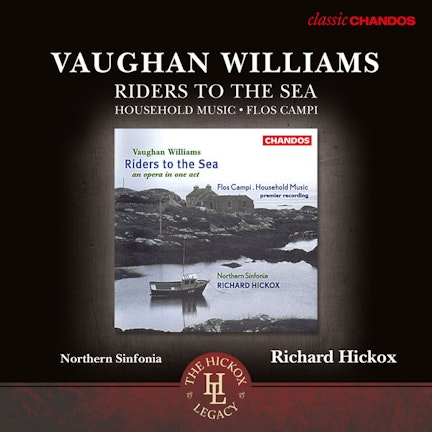
Vaughan Williams: Riders To the Sea / Household Music / Flos Campi
Vaughan Williams: Riders to the Sea, Op. 1, Household Music & Flos campi
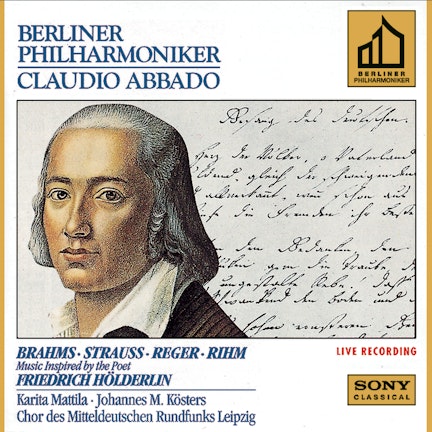
Brahms & Strauss & Reger & Rihm: Music Inspired by the Poet Friedrich Hölderlin
Kasarova singt Berlioz, Ravel, Chausson
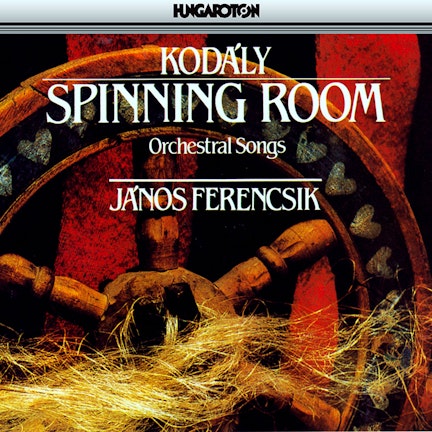
Kodaly: Szekely Fono (The Transylvanian Spinning Room)
Purcell: Dioclesian, Z. 627 (Acts I-IV)
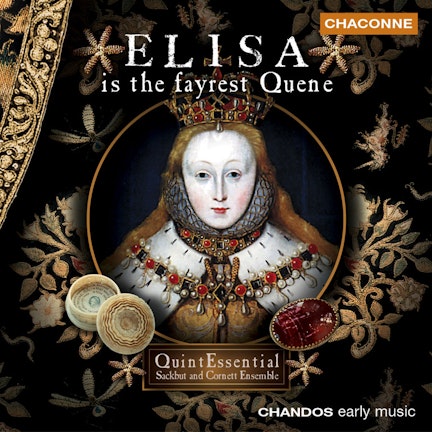
Johnson: Elvetham Entertainment / Byrd: Fantasia / Dowland: The First Booke of Songs
A Baroque Christmas
Britten: Sinfonietta / Serenade / Now Sleeps the Crimson Petal / Nocturne