Max Reger, a highly skilled orchestrator, had a unique method of composing: he would write all the flute parts from beginning to end, then return to the start for the oboe parts, and so on.
Performer Biography
Love Derwinger, the pianist on this album, made his debut at age sixteen and has since performed globally with major orchestras and conductors, and is known for his versatility across various musical genres.
Performer Biography
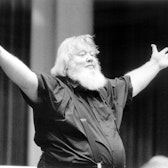
Leif Segerstam, the conductor on this album, is a versatile Nordic musical talent who studied violin, piano, composition, and conducting, and has held chief conductor positions with several major orchestras.
Critical Reception
Despite his prominence, composer Max Reger's music often received negative reviews during his lifetime, such as for his Piano Concerto in 1910.
Historical Context
Despite Germany and Russia being at war during World War I, a memorial concert for Max Reger was held in St. Petersburg just a week after his death in 1916, highlighting his international esteem.
Composition History
Max Reger, who died at age 43, never composed a symphony, possibly due to a complex similar to Brahms, who also wrote his first symphony at that age.
Composer's Artistic Vision
Max Reger, a staunch advocate of absolute music forms like the sonata and fugue, surprisingly ventured into descriptive program music with his Four Böcklin Tone-Pictures, at a time when such music was declining.
You might also enjoy...
Nocturne
Max Reger - Orchestral Edition - Variations, Suites, Romances
French Orchestral Favourites
Grieg: Complete Orchestral Works
Vindobona Classics Collection Vol.2
Curtain Calls!
Tchaikovsky: The Nutcracker Suite - Weber: Invitation to the Dance - Strauss: Der Rosenkavalier - Rimsky-Korsakov: Capriccio espagnol
Barcarole - Favourite Orchestral Pieces
Tchaikovsky: Romeo and Juliet - Fantasy Overture / Dvorak: Carnival Overture