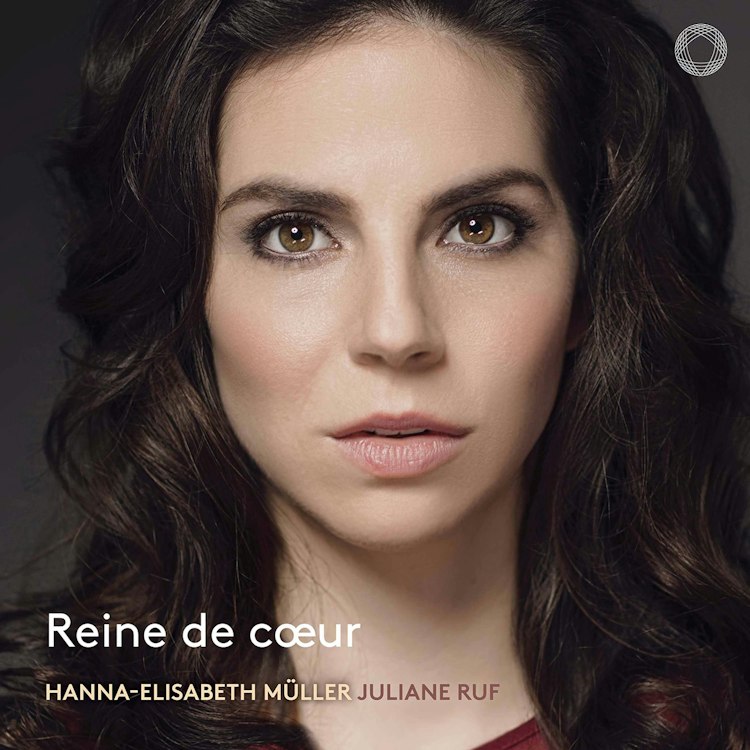
Rising soprano star Hanna-Elisabeth Müller makes her debut recording for Pentatone with varied song cycles by three composers. Schumann's Gesänge op. 107 and Gedichte und Requiem op. 90, and Zemlinsky's Walzer-Gesänge represent two stages in the German tradition of the art song, while Poulenc's La courte paille and Fiançailles pour rire offer a lively French contrast.
Featuring
Hanna-Elisabeth Müller
Juliane Ruf
Robert Schumann
Francis Poulenc
Alexander von Zemlinsky
Did you know?
1/7
Composition History
Robert Schumann penned the final 'Requiem' of his Op. 90 under the mistaken belief that Nikolaus Lenau, the poet, had already died.
Album & Artwork
The album "Reine de cœur" is a personal anthology of favorite songs compiled by soprano Hanna-Elisabeth Müller, aiming to convey her enthusiasm to the listener.
Composer's Artistic Vision
The album's program was conceived around the themes of love and life, exploring the heights and depths of the human soul as interpreted by different poets and composers.
Composition History
Robert Schumann's Sechs Gesänge, Op. 107, published in 1852, begin with lamentation and conclude with an acceptance of love's often harsh realities.
Compositional Technique
In his 1960 work Le courte paille, Poulenc skillfully uses voice, piano, and poetry to evoke the special relationship between parent and child, particularly childhood phonetic instruction.
Composer Biography
By the early 1950s, Francis Poulenc (1899-1963) had composed over a hundred mélodies, earning him recognition as the unrivaled master of French art song.
Compositional Technique
Schumann's Op. 107 uses poems by five different poets, initially deflecting attention from the narrative coherence that binds the songs.