Krzysztof Penderecki's Ciaccona in memoriam Giovanni Paolo II is part of his Polish Requiem, a work that took 26 years to compose, with each part linked to important Polish historical events.
Compositional Technique
In Sofia Gubaidulina's Sonata 'Freue dich!', the balance between natural sound and harmonics, achieved by changing finger pressure on the string, illustrates the dual nature of sound, representing earthly and divine aspects.
Interpretation
The performers, Maria Sławek (violinist) and Marcin Zdunik (cellist), decided to completely break away from the piano version of Bach's Inventions, using techniques like pizzicato and harmonics not available on a keyboard instrument.
Composer's Artistic Vision
Sofia Gubaidulina's Sonata 'Freue dich!' was inspired by the writings of Grigory Skovoroda, an 18th-century Ukrainian philosopher, particularly his concept of finding the divine within oneself.
Compositional Technique
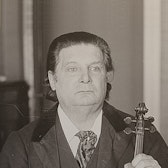
Eugène Ysaÿe's Six Sonatas for Solo Violin Op. 27 expanded the tonal spectrum, introduced new techniques for complex chords, and incorporated fourths, dissonances, and microtones.
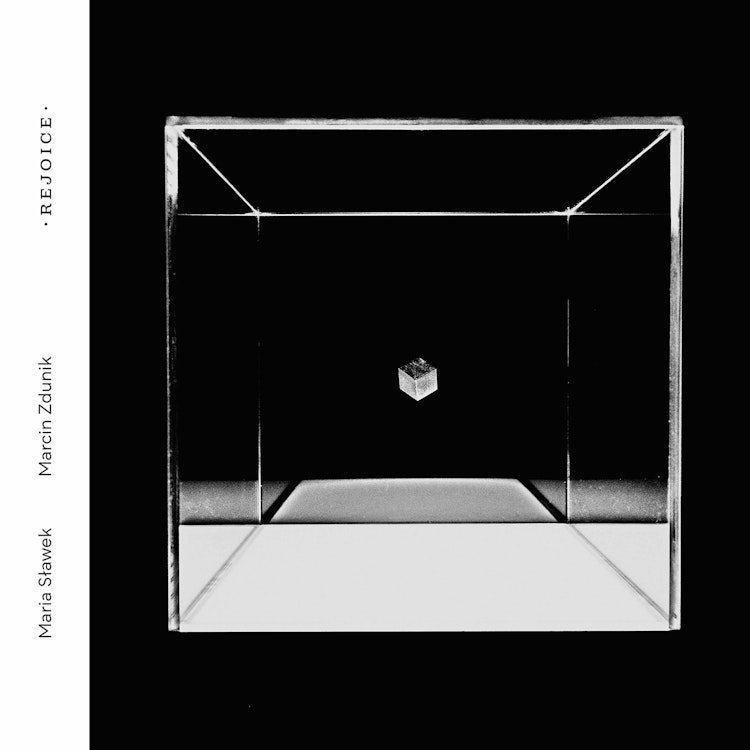
Album & Artwork
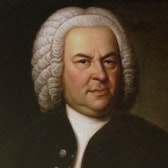
All the works on this album share a common thread: each composer, Johann Sebastian Bach, Eugène Ysaÿe, Krzysztof Penderecki, and Sofia Gubaidulina, refers in some way to Bach.
Composer Biography
Sofia Gubaidulina, a Russian composer with Tatar roots, was criticized for her experiments with extended tonality during her studies at the Moscow Conservatory, but was defended by Dmitri Shostakovich.