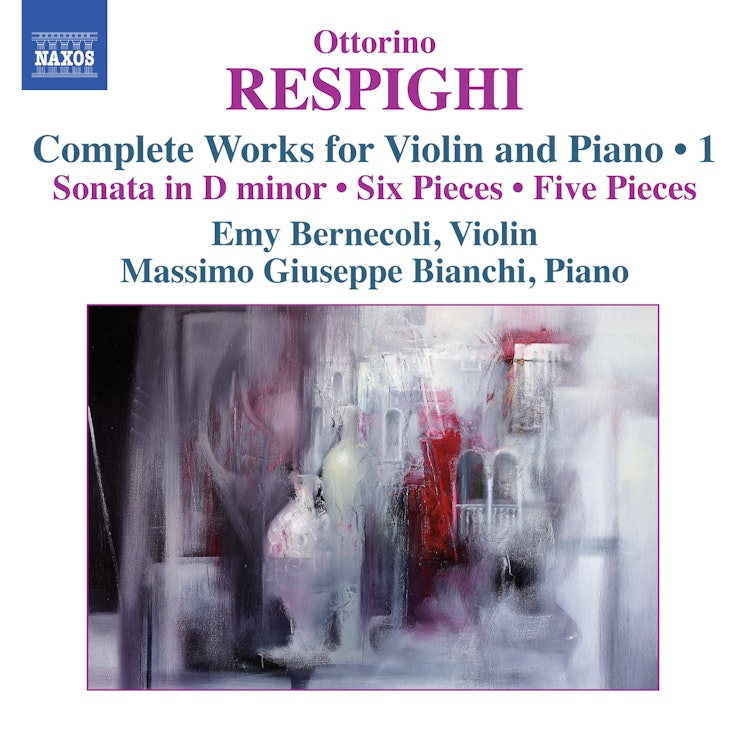
Respighi: Complete Works for Violin & Piano, Vol. 1
8/4/2014, 16 Tracks, 1:11:03
Featuring
Emy Bernecoli
Massimo Giuseppe Bianchi
Ottorino Respighi
Did you know?
1/7
Composer's Artistic Vision
Respighi's early works show an openness to various influences, including German Post-Romanticism, 'eastern breezes' from his time in Russia, and the French school of Franck, Fauré, and Debussy.
Composer Biography
Respighi studied violin with Federico Sarti and composition with Luigi Torchi and Giuseppe Martucci at the Liceo musicale in Bologna, graduating in violin in 1899.
Composer Biography
Respighi spent time in Russia in 1901 and 1902 as principal viola in the Imperial Theatre orchestra and studied with Nikolai Rimsky-Korsakov, who significantly influenced his orchestration skills.
Compositional Technique
Even in his early works, Respighi demonstrated a strong sense of form, often using sonata form or alternating two contrasting ideas in a rondo-like structure.
Compositional Technique
Respighi's early violin writing is sweeping and vocally inflected, prioritizing melody over virtuosity, while the piano often takes the lead, providing harmonic support and creating chordal 'colours'.
Composer's Artistic Vision
Respighi was a key figure in the rebirth of Italian instrumental music, drawing inspiration from his country's musical past, including composers like Monteverdi and Tartini.
Composer Biography
Ottorino Respighi, the composer, was born into a family of musicians in Bologna in 1879; his grandfather was a violinist and organist, and his father, Giuseppe, a pianist and his first teacher.
You might also enjoy...
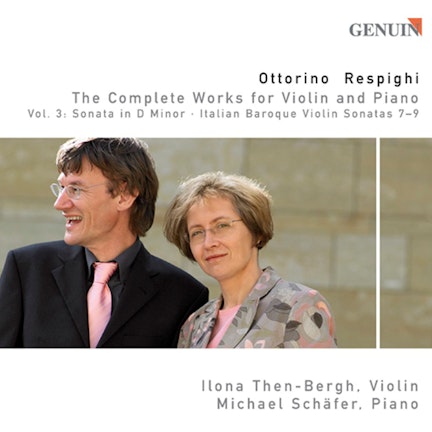
Respighi, O.: Violin and Piano, Vol. 3
Violin Recital: Gilman, Alexander - Brahms, J. / Prokofiev, S. / Wieniawski, H. / Foster, S.
Presenting Joshua Bell
Note d'Europa
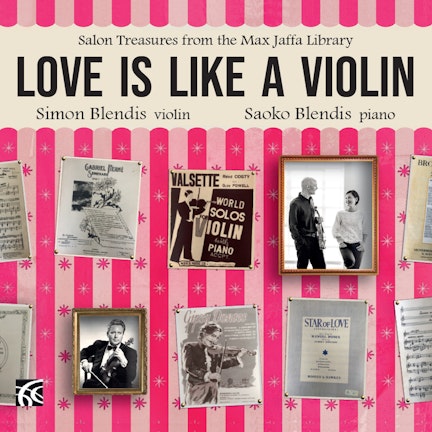
Love Is Like A Violin: Salon Treasures from the Max Jaffa Library