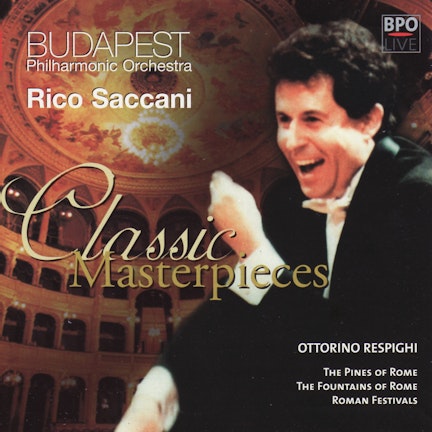
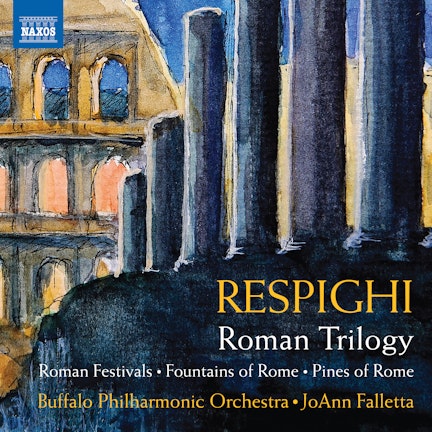
Respighi's "Roman Trilogy" works, while often popular with audiences and conductors like Arturo Toscanini, frequently faced dismissive critical reviews, with some critics calling his orchestration "slick" or "vulgar."
Composer's Artistic Vision
Respighi's musical language was shaped by an international outlook, drawing from Richard Strauss, Debussy, and Russian composers, as well as plainsong and Italian baroque music.
Historical Context
The premiere of "Fountains of Rome" was delayed due to public hostility towards Austro-German music after Austrian warplanes bombarded Padua, leading to a concert where Arturo Toscanini was booed off stage.
Composer Biography
Respighi, an excellent violinist, met Rimsky-Korsakov in St Petersburg in 1900 and received orchestration lessons from him, which he described as "very important for me."
Composition History
The idea for Respighi's "Fountains of Rome" was inspired by four photographic prints of Roman fountains sent to him by the magic realist artist Edita Walterowna Broglio in December 1913.
Compositional Technique
In "Pines of Rome," Respighi controversially used a gramophone recording for the nightingale's song in the third movement, a novel technique that disarmed critics by its "artlessness."
Composer Biography
Ottorino Respighi, the composer, studied with Giuseppe Martucci, a composer and conductor who introduced Bolognese audiences to Wagner and Brahms.
You might also enjoy...
Respighi: Pines of Rome, P. 141
Respighi: Pines of Rome, Fountains of Rome & Metamorphoseon modi XII
Respighi Fontane di Roma; Pini di Roma; Feste Romane: Classic Library Series
Respighi:Pines Of Rome
Respighi: Pini di Roma, Fontane di Roma & Feste romane
Respighi: Pini di Roma; Feste romane; Fontane di Roma
Respighi: Fountains of Rome - Feste Romane
Respighi: Pines of Rome/Fountains of Rome/Roman Festivals
Respighi: Pini di Roma, Feste Romane
Respighi: Fontane Di Roma / Pini Di Roma / Feste Romane