Joseph Gabriel Rheinberger's early studies with Franz Lachner, an associate of Schubert, make him a key link in a chain from Schubert to the American experimentalist Charles Ives.
Instruments
Rheinberger composed his organ music for instruments that could only change loudness by adding or reducing stops, not with adjustable swell shades common today.
Recording & Production
This recording is dedicated to Timothy Rowe, the conductor, who was a vital force in the musical life of the Washington D.C. area for almost 25 years and founded The Amadeus Concerts, Inc.
Composer Biography
Joseph Gabriel Rheinberger, the composer, became an organist for his hometown parish in Liechtenstein at age seven and was offered a professorship in piano at the Munich conservatory at nineteen.
Composer's Artistic Vision
Rheinberger, a Roman Catholic composer, found a way to reconcile liturgical dignity with contemporary musical knowledge, similar to Palestrina centuries earlier.
Compositional Technique
For his organ concertos, Rheinberger chose a string orchestra with judicious touches of color, such as a trio of horns in the First Concerto and pairs of trumpets and horns with timpani in the Second.
Instruments
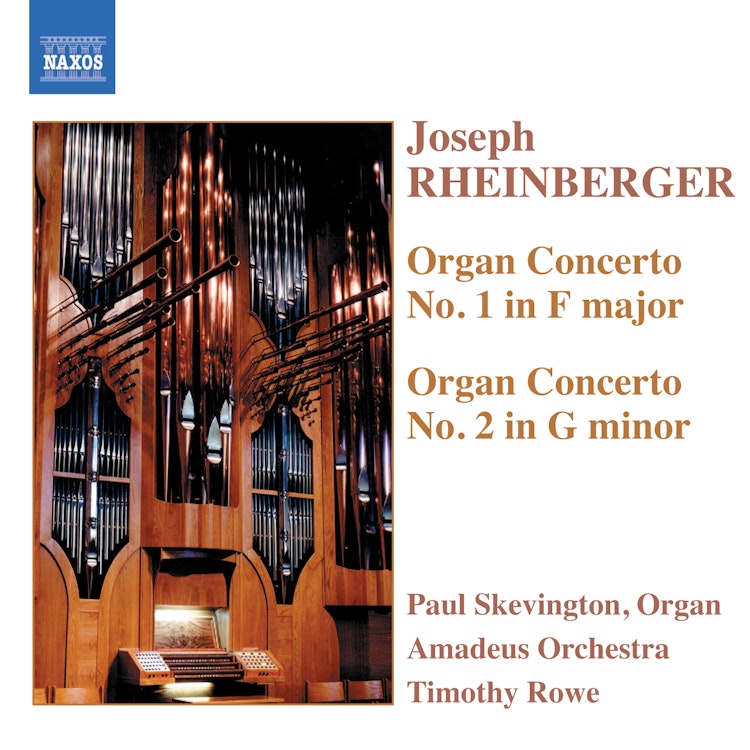
The recording features the highly acclaimed 61-rank, Steiner-Reck mechanical-action pipe organ at Saint Luke Church, an instrument Paul Skevington, the organist, spearheaded the effort to purchase.
You might also enjoy...
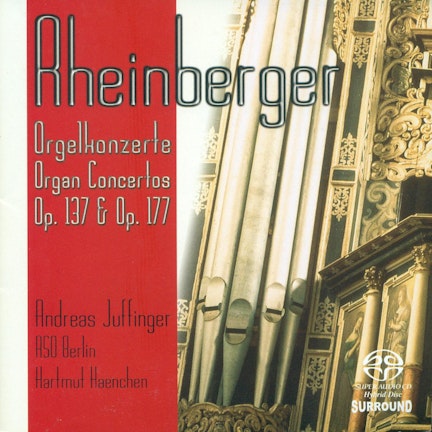
Rheinberger: Organ Concertos Nos. 1 & 2 / Suite for Violin and Organ, Op. 166
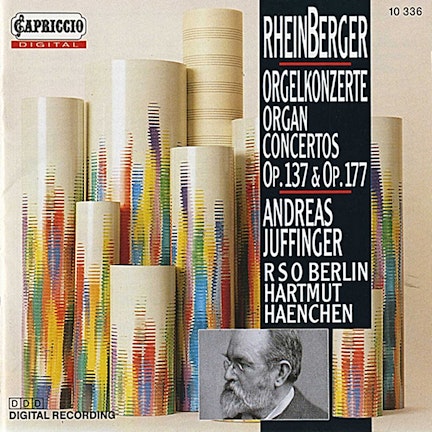
RHEINBERGER, J.G.: Organ Concertos Nos. 1 and 2 / Suite for Violin and Organ, Op. 166 (Juffinger)
Perspectives Concertantes
Giuliani: Guitar Concertos No. 1&3, Rodrigo: Concierto de Aranjuez
Giuliani: Gitarrenkonzerte Nr. 1&3, Rodrigo: Concierto de Aranjuez
Giuliani & Arnold: Guitar Concertos
Accordion Concertos
Gnattali: 4 Concertinos for Guitar and Orchestra
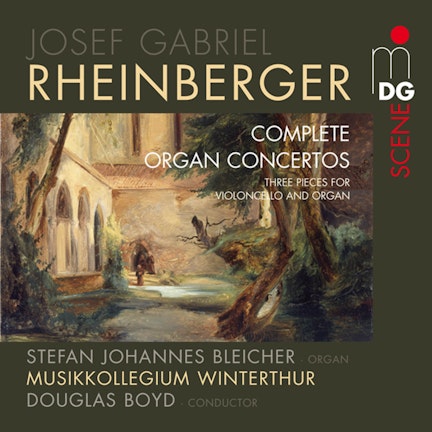
Rheinberger: Complete Organ Concertos
Arne: Organ Concertos
Saint-Saens: Cypres Et Lauriers / Dubois: Fantaisie Triomphale
Gliere: Coloratura Soprano Concerto / Harp Concerto / Ginastera: Harp Concerto