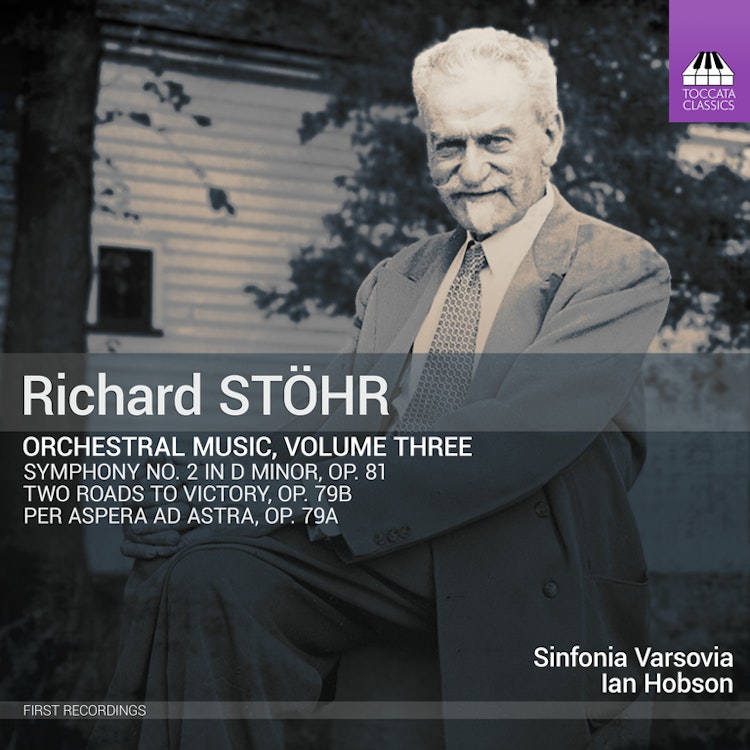
Richard Stöhr taught at the Conservatoire of the Gesellschaft der Musikfreunde in Vienna for over three decades, mentoring students who included Korngold, Mahler, Sibelius, and Hugo Wolf.
Composer's Artistic Vision
Richard Stöhr considered himself a late-Romantic composer, admitting in 1905, 'I am not a modern composer; I do not understand the modern direction, and after it has triumphed, the world will not understand me'.
Cultural Impact
Richard Stöhr's textbooks on music theory, such as 'Praktische Leitfaden der Harmonielehre', were highly successful and widely distributed, with the harmony guide reaching 27 editions.
Composer Biography
Richard Stöhr initially studied medicine to appease his father, graduating in 1898, before changing direction to pursue music, converting to Protestantism and changing his surname from Stern to Stöhr.
Historical Context
Following the 1938 Anschluss, Richard Stöhr, being Jewish, was pensioned off and listed among those expelled from the Reich Chamber of Music, forcing him to emigrate to the USA.
Composer Biography
Richard Stöhr taught Leonard Bernstein counterpoint at the Curtis Institute, with Bernstein describing him as 'a remarkable teacher, a patient, gentle and deeply learned man'.
Composer Biography
Richard Stöhr, born Richard Franz Stern, came from a well-to-do Jewish family in Vienna; his uncle, Heinrich Porges, was the chief choral conductor for the original Bayreuth production of Parsifal.
You might also enjoy...
Steven Stucky, Christopher Rouse, Ives
Rubbra: Symphony No. 10 / A Tribute / Improvisations On Virginal Pieces by Giles Farnaby
Waiting for Sunrise
Brusa: Orchestral Works, Vol. 3
Pettersson: Symphony No. 15 - Das Gesegnete, das Verfluchte
Haubenstock-Ramati: Symphonie 'K' / Glokobar: Etude pour Folklora II
Anthony Iannaccone: Looking Back, Moving On
Clásicos Cubanos
The Copland Collection: Early Orchestral Works (CD #1: 1923 - 1928 & CD #2: 1929 - 1935)
Langgaard, R.: Symphonies (Complete), Vol. 3 - Nos. 4, 6
Schuman, W.: Symphony No. 8 / Night Journey / Ives, C.: Variations on America (orch. W. Schuman)
Contemporary American Composers
Hovhaness: Guitar Concerto No. 2 / Symphony No. 63 / Fanfare for the New Atlantis