Richard Strauss: Macbeth, Don Juan, Tod und Verklärung & Festmarsch in C
5/4/2018, 4 Tracks, 1:10:33
Featuring
Kirill Karabits
Staatskapelle Weimar
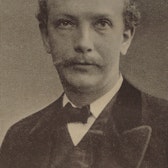
Richard Strauss
Did you know?
1/7
Performer Biography
The Staatskapelle Weimar, founded in 1491, is one of Germany's oldest orchestras and has been associated with famous musicians like Johann Sebastian Bach, Franz Liszt, and Richard Strauss.
Composer Biography
Richard Strauss's father, Franz Strauss, was a renowned horn player with conservative tastes who considered Mozart and Beethoven as 'gods' and disliked the 'New German School' of composers like Wagner.
Composition History
Richard Strauss's first tone poem, 'Macbeth', went through three versions before he was satisfied, and he revised the ending at the suggestion of his mentor Hans von Bülow.
Compositional Technique
In 'Macbeth', Richard Strauss uses the bass trumpet, an instrument he encountered at Bayreuth performances of Wagner's 'Ring' cycle, to emphasize the sombre soundscape.
Composer's Artistic Vision
Richard Strauss's 'Tod und Verklärung' ('Death and Transfiguration') is a musical dramatization of the 'hour of death of a person who has pursued the highest aspirations', and marks the beginning of his self-portrait works.
Composer's Artistic Vision
Richard Strauss, influenced by Alexander Ritter, the concert master of the Meiningen court orchestra, began to regard the symphony and sonata form as an 'empty shell' and sought 'new thoughts' in 'new forms'.
Composition History
Richard Strauss's conducting career began when Hans von Bülow, a conductor who premiered Wagner's operas, invited the young composer to conduct his own Suite for wind instruments, Op. 4.
You might also enjoy...
Strauss: Till Eulenspiegel; Salome's Dance of the Seven Veils; Tod und Verklärung
Strauss, R.: Also sprach Zarathustra; Salomes Tanz; Don Juan; Till Eulenspiegel
Richard Strauss: Tone Poems and Interludes
Richard Strauss: Orchestral Works - Complete Edition
Richard Strauss: Don Quixote; Till Eulenspiegel; Romance For Cello & Orchestra
Richard Strauss: Also sprach Zarathustra; Till Eulenspiegels lustige Streiche etc.
Richard Strauss: Don Quixote. Till Eulenspiegel
Strauss, R.: Till Eulenspiegel / Don Juan / Tod Und Verklarung / Intermezzo: Traumerei Am Kamin
Strauss, R.: Symphonic Poems, Vol. 2
Santtu Conducts Strauss: Don Juan, Eine Alpensinfonie, Also Sprach Zarathustra & Till Eulenspiegels lustige Streiche
R. Strauss: Complete Tone Poems
Strauss: Don Juan & Till Eulenspiegels lustige Streiche & Tod und Verklärung