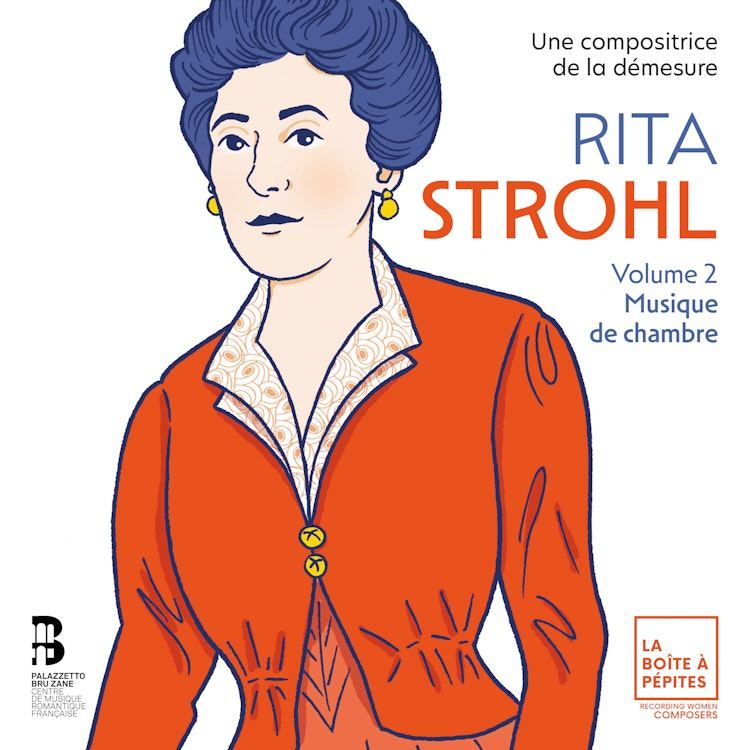
Rita Strohl's mother, Élodie Jacquier, was a painter whose work was exhibited at the Paris Salon and also gave Rita her first music lessons.
Critical Reception
Eight years after her death, Rita Strohl's name had largely been forgotten, prompting musician Jane Bathori to advocate for her music on a radio broadcast in 1949.
Composer's Artistic Vision
Rita Strohl, after 1898, aimed to "make contact with her own time" and developed a predilection for the six-tone scale in works like her 'Forest Symphony' and 'Water Music'.
Composer Biography
Rita Strohl's Conservatoire report cards initially noted her lack of attendance and work, despite acknowledging her "pretty musical organization."
Compositional Technique
Rita Strohl's 'Grande Fantaisie-Quintette' functions more as a chamber concerto for solo piano with an accompanying quartet, rather than balancing the roles of all instruments.
Composition History
Rita Strohl composed a lyric symphony on Joan of Arc, which was performed in her hometown but later burned, with only a few measures surviving in a string quartet.
Compositional Technique
Rita Strohl's 'Arlequin et Colombine' Trio marks a stylistic turning point, using a completely diatonic first theme that becomes chromatic and features a playful dialogue between clarinet and cello.
You might also enjoy...
Thomas Pitfield: String Chamber Music
A Piano Trio Anthology
Horn Trios
Widor: Piano Trio, Op. 19 / Piano Quintet, Op. 7
Goetz: Piano Quintet & Quartet
Dohnányi: Piano Quintet No. 2 / Piano Sextet
Enescu: String Octet, Piano Quintet
Johanna Senfter: Chamber Music
Gassenhauer
Brillante II
Tchaikovsky & Martinů: Piano Trios
Kodály: Sonata for Solo Cello, Op. 8 / Duo for Violin and Cello, Op. 7