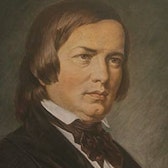
Robert Schumann often used the pseudonyms Florestan and Eusebius, members of his imaginary 'Davidsbund', to represent the extroverted and introverted sides of his poetic nature.
Critical Reception
Much of Robert Schumann's early piano music, including his Sonata, Op. 11, caused bafflement or fear due to its perceived eccentricities and formal complexity.
Recording & Production
This recording uses 24-bit / 96 kHz technology, which offers a dynamic range up to 48 dB greater and 256 times the resolution of standard 16-bit recordings, to reproduce the original waveform as closely as possible.
Compositional Technique
Robert Schumann's Humoreske, Op. 20, features an 'inner voice' notated on a separate middle stave that is not meant to be played, but rather heard as the echo of an unperformed melody.
Performer Biography
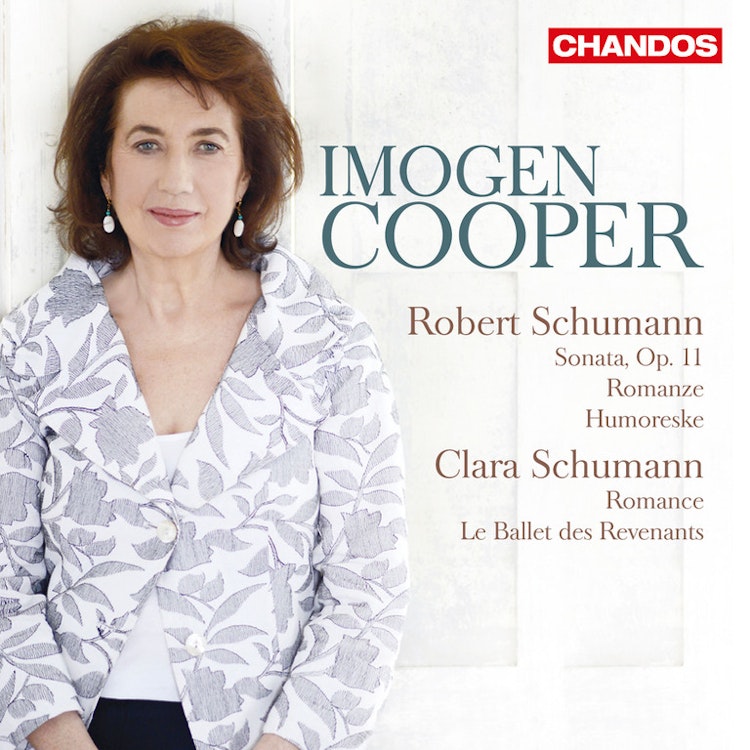
Imogen Cooper CBE, the pianist on this recording, is recognized worldwide for her virtuosity and poetic poise and has performed with major orchestras like the New York Philharmonic and Wiener Philharmoniker.
Composer's Artistic Vision
Robert Schumann believed that the 'Romantic' quality in music doesn't lie in figurations or forms, but will be present if the composer is a poet.
Instruments
The recording features a Steinway Model D grand piano, built in 2007 by Steinway Hamburg, provided by Aldeburgh Music.
You might also enjoy...
Popular Piano Classics: Daniell Revenaugh
Images Poetiques
Piano Recital: Rosenberger, Carol - Debussy, C. / Chopin, F. / Liszt, F. / Faure, G. / Ravel, M. / Schumann, R. / Haydn, F. / Bach, J.S.