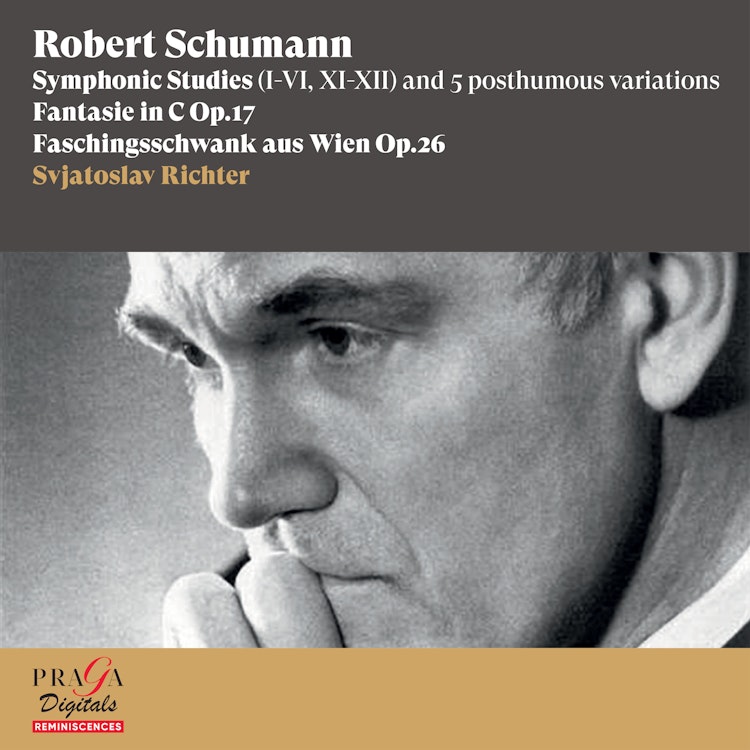
Robert Schumann: Symphonic Studies, Fantasie Op. 17 & Faschingsschwank aus Wien
4/1/2013, 23 Tracks, 1:18:21
Featuring
Sviatoslav Richter
Robert Schumann
Did you know?
1/7
Composition History
Schumann began composing his Symphonic Studies in autumn 1834, initially as 'Variations pathétiques' on a theme by Baron von Fricken, the guardian of Ernestine von Fricken, whom Schumann thought he loved.
Interpretation
Richter's interpretation of Schumann's music showed a predilection for long-neglected works, such as the Nachtstücke, Op.23, and the six Bilder aus Osten for piano duet.
Composition History
Schumann's Fantasy in C major, Op.17, composed in 1836, was a work of pure passion dedicated to Clara Wieck, whom he had realized he loved, despite her father's opposition.
Composer's Artistic Vision
The Fantasy in C major, Op.17, was originally conceived by Schumann as three poems titled 'Ruins, Triumphal Arches and Starry Crowns,' and was intended as a contribution to a monument for Beethoven.
Composition History
The final variation (XII) of the Symphonic Studies incorporates a theme from Marschner's opera 'Der Templer und die Jüdin' ('Du stolzes England, freue dich') as a tribute to his English friend, William Sterndale Bennett.
Compositional Technique
The Fantasy in C major, Op.17, treats tonality unusually; its declared key of C major does not fully assert itself until the final bars of the first movement, following dissonant chords that create a 'Tristanesque mood'.
Performer Biography
Svjatoslav Richter, the pianist on this album, primarily performed Schumann's works between 1955 and 1971, a period that also included his Beethoven and Schubert performances.
You might also enjoy...
Piano Preludes
Bianca Calinescu Debut Recording
Italian Romantic Piano Music - Rossini, Sgambati, Martucci