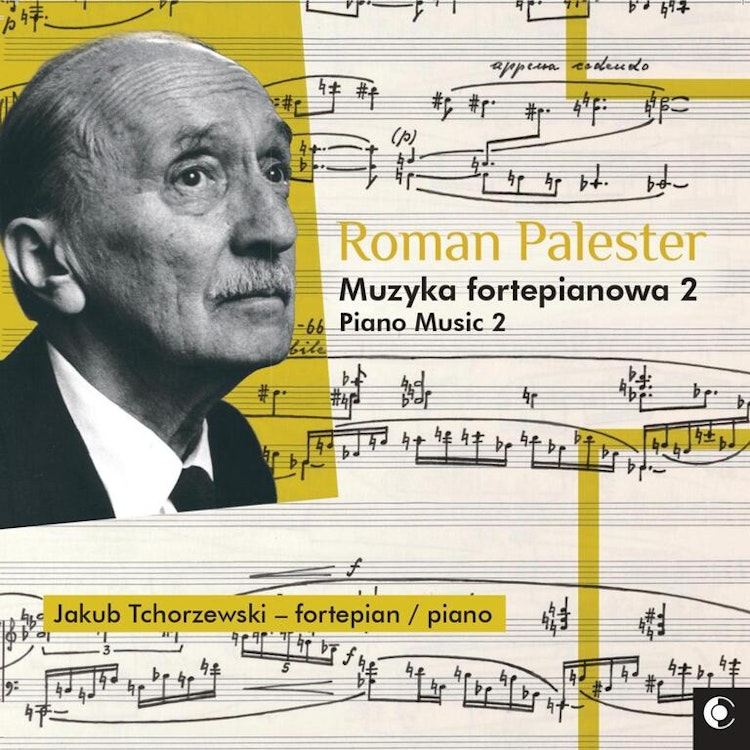
Roman Palester chose to emigrate to the West due to his growing disagreement with the artistic and moral compromises demanded by the communist government in Poland.
Composer Biography
Roman Palester, the composer, was once considered a successor to Karol Szymanowski, a prominent Polish composer, and achieved significant success early in his career.
Composer Biography
Roman Palester worked for two decades as the director of the cultural section at Radio Free Europe in Munich, where he informed Polish listeners about Western cultural events.
Compositional Technique
Palester's late piano works, including the Etudes and Piano Sonata No. 2, combine classical formal models with original, contemporary content, often incorporating dodecaphony and sonoristic elements.
Cultural Impact
After Palester's emigration, the communist authorities in Poland attempted to erase his person and work from public consciousness through bans on performances, publications, and mentions.
Performer Biography
Jakub Tchorzewski, the pianist on this album, is the first in history to record Roman Palester's complete works for solo piano.
Compositional Technique
Both the Etudes and Piano Sonata No. 2 by Roman Palester are written without bar lines, allowing the pianist flexibility in shaping the musical narrative.
You might also enjoy...
Gál: The Complete Works for Solo Piano
Eisler: Piano Sonata No. 2, Klavierstücke für Kinder, Op. 31 & 4 Klavierstücke, Op. 3
Copland: Piano Sonata / Piano Fantasy / Piano Variations
Gershwin & Wild
Gershwin & Wild
Chopin & Szymanowski
Vibrant Rhythms
Bartók & Mussorgsky: Piano Works
Messiaen: Petites esquisses, Etudes de rythmes, Canteyodjaya, Hommage P. Dukas, Prelude 1964
Grosz: Piano Music, Vol. 1
Martinu: Piano Sonata No. 1, H. 350, Les Ritournelles, H. 227 & Fantaisie et Toccata, H. 281