Romero's secular works often feature a lively and theatrical soprano line, sometimes isolating a single voice to express individual emotion, hinting at accompanied monody.
Composer's Artistic Vision
Romero's music, though largely polyphonic, belongs to the emotional aesthetic world of the Italian madrigal, showing that Spain was not isolated from European musical trends.
Composer Biography
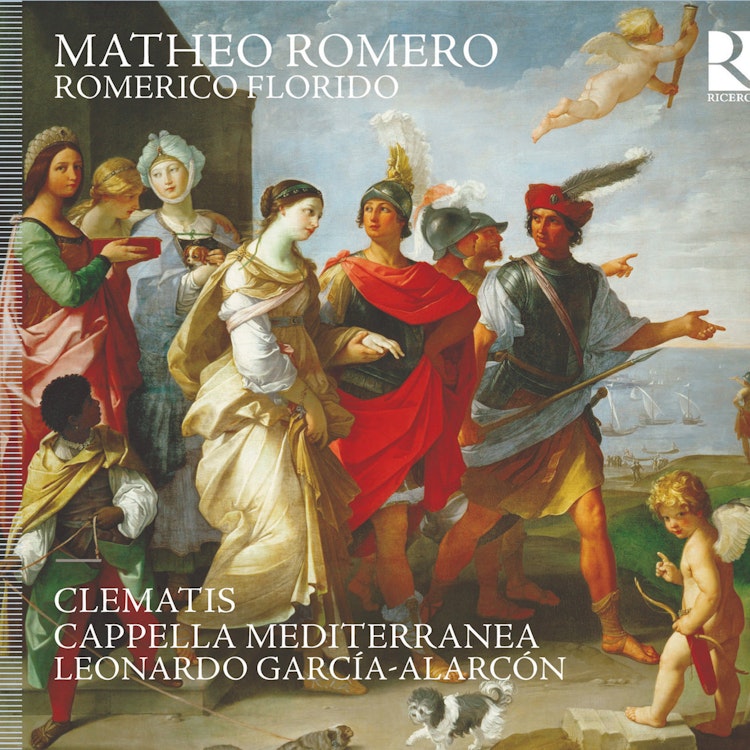
Matheo Romero, born Matthieu Rosmarin in Liège around 1575, adopted the Spanish spelling of his name after joining the Spanish Royal Chapel.
Cultural Impact
Matheo Romero's music left a significant mark across the Hispanic world, with his works found in Mexico, Guatemala, Peru, Bolivia, and even parts of Italy under Spanish rule.
Composition History
The majority of Matheo Romero's secular compositions are preserved in the Cancionero de la Sablonara manuscript, kept in the Bayerische Staatsbibliothek in Munich.
Composer Biography
Matheo Romero served as music master to the future King Philip IV of Spain, teaching him the vihuela and composition.
Composer Biography
Matheo Romero was known as 'Maestro Capitán', a nickname earned through his exceptional musical gifts and superiority over his colleagues.
You might also enjoy...
Guerre et Paix
Sephardic Journey
Ciacconas, Canzonas & Sonatas: Violin music from the collection Partiturbuch Ludwig (1662)