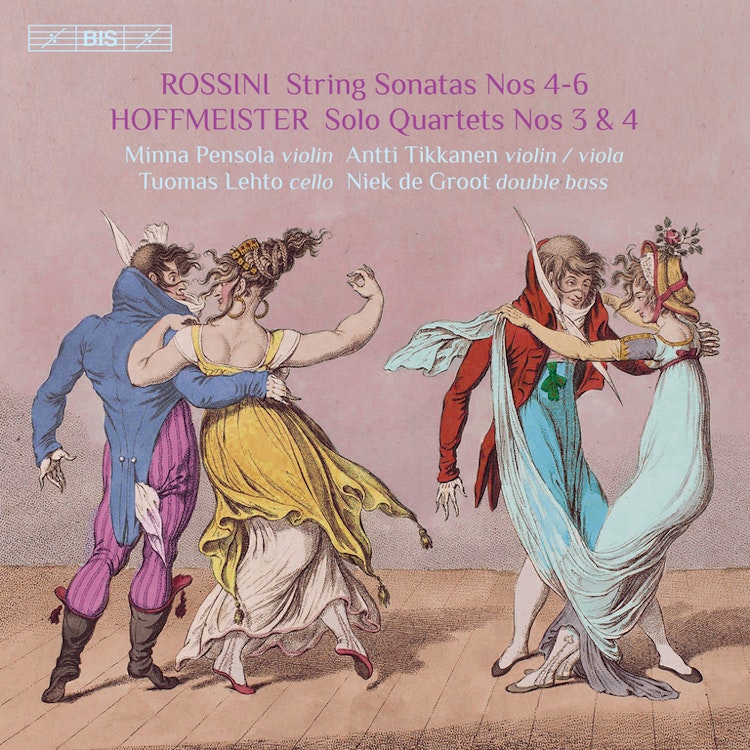
Hoffmeister's 'solo quartets' replace the first violin with the double bass, allowing the instrument to showcase both virtuosity and lyrical qualities.
Composition History
Rossini's Six String Sonatas were composed at age twelve during a summer holiday for a wealthy merchant and amateur double bass player, Agostino Triossi, and his family.
Composer Biography
Franz Anton Hoffmeister, though little known today, was a central figure in Viennese musical life, publishing works by Haydn, Mozart, and Beethoven, and composing nearly 70 symphonies and 45 concertos.
Composer's Artistic Vision
Rossini's early sonatas, though not 'operatic,' display a theatrical flair and melodic genius, with themes that are quick, cheerful, and sometimes sensual, hinting at his future success in opera buffa.
Historical Context
In 18th-century Vienna, the double bass became an equal partner in chamber ensembles, enjoying a musical golden age alongside other instruments.
Historical Context
The double bass, though its history dates back to other bowed string instruments in northern Italy, only found its true voice around 1700.
Instruments
The double bass on this recording is a Domenico Montagnana from Venice, crafted in 1747.