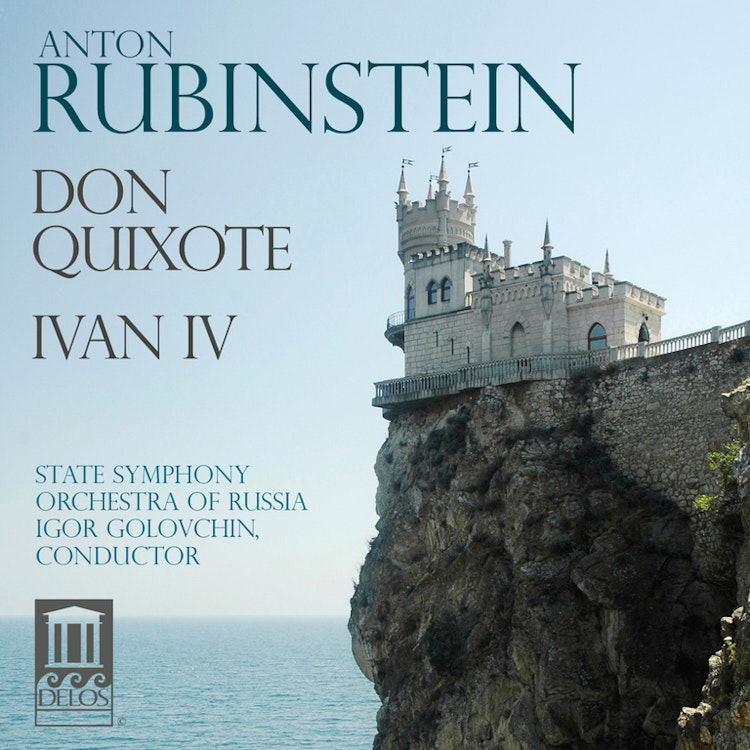
Rubinstein's Don Quixote emphasizes self-sacrifice from a comic perspective, unlike Richard Strauss's later, more jocular work.
Performer Biography
Igor Golovchin, the conductor, was granted the unprecedented privilege of choosing his teacher at the Moscow Conservatory, selecting renowned musician Kiril Kondrashin.
Critical Reception
Tchaikovsky, a contemporary composer, found Rubinstein's Don Quixote "very interesting, and perfect in places," despite its episodic nature.
Composer's Artistic Vision
Anton Rubinstein, the composer, was intrigued by the idea of portraying various human characters in music, rather than focusing on a specific musical genre.
Composition History
Rubinstein's idea for Don Quixote came after a meeting with Turgenev, a writer, who proposed a new interpretation of Cervantes' story.
Compositional Technique
In Don Quixote, Rubinstein achieves a comic mood by subtly comparing diverse thematic materials, sometimes even presenting themes with different time signatures simultaneously.
Composition History
Rubinstein initially worked on an opera about Tsar Ivan IV, but abandoned it due to dissatisfaction with the libretto's portrayal of the tsar.
You might also enjoy...
Respighi: Church Windows
Pictures at an Exhibition
Fauré: Pavane, Op. 50 (Version for Orchestra)
Reger: Hiller-Variationen
Suk: Fantastic Scherzo, Op. 25
Saint-Saëns: Carnival of the Animals, R. 125: VII. Aquarium