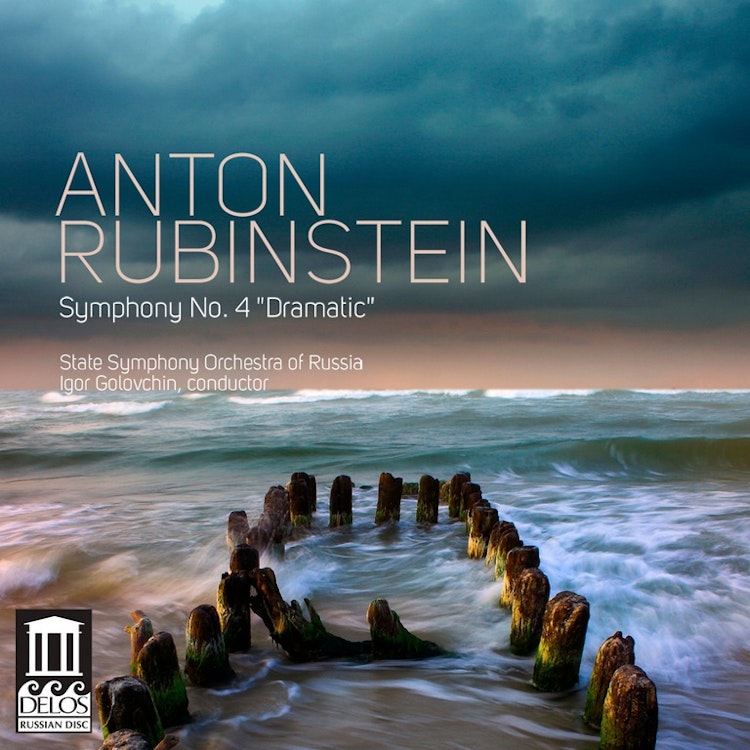
Igor Golovchin, the conductor on this album, was granted the unique privilege of choosing his teacher at the Moscow Conservatory, selecting Kiril Kondrashin, a renowned musician.
Compositional Technique
Rubinstein's 'Dramatic' Symphony is cast in the traditional four-movement form and uses modest instrumentation, with only three trombones added to the usual pre-Berliozian orchestra in the finale.
Composer's Artistic Vision
Rubinstein subtitled his Fourth Symphony 'Dramatic' to protest against Wagner's theory that Beethoven had exhausted symphonic development, aiming to revive Beethoven's style of 'symphonic drama'.
Recording & Production
This recording of Anton Rubinstein's Symphony No. 4 was made in October 1993 in the Great Hall of the Moscow Conservatory.
Composition History
Anton Rubinstein, the composer, wrote four symphonies in the first half of the 1850s, then produced no more for almost 20 years before renewing his symphonic writing in the mid-1870s.
Critical Reception
Pyotr Ilyich Tchaikovsky, a renowned Russian composer, described Rubinstein's 'Dramatic' Symphony as 'one of the most interesting' he had heard recently, praising its masterly technique and daring invention.
Critical Reception
The 'Dramatic' Symphony was first heard in 1875 under the composer's baton, sparking lively controversy in the press about the meaning of its title.
You might also enjoy...
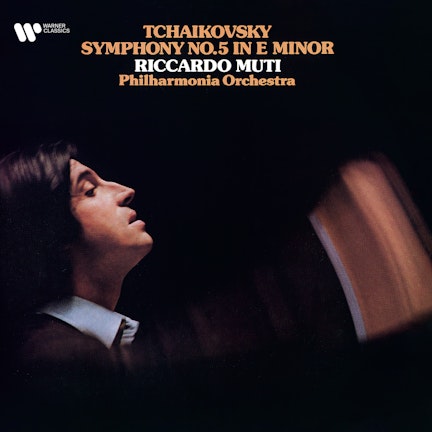
Tchaikovsky: Symphony No. 5 in E Minor, Op. 64
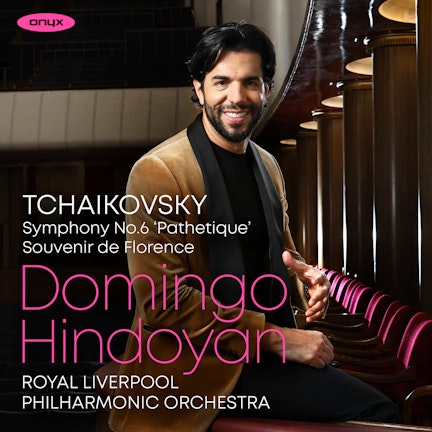
Tchaikovsky: Symphony No.6 "Pathétique"
Tchaikovsky: Symphony No. 4
Rachmaninov: Symphony No. 2
Miaskovsky: Symphony No. 6, Op. 23
Prokofiev: Symphonies Nos. 2 & 6
Tschaikowsky: Symphonien No. 4, 5 & 6 Pathétique
Tchaikovsky: Symphony No. 4 in F Minor, Op. 36, TH 27
Taneyev, S.I.: Symphonies Nos. 1 and 3
Symphony No. 6 in B Minor, Op. 74, "Pathetique": II. Allegro con grazia