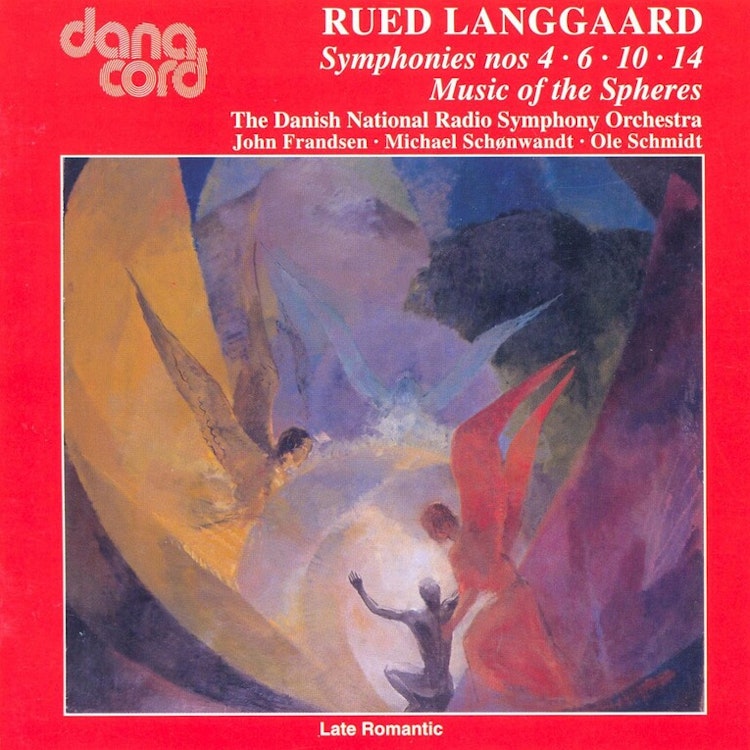
Langgaard's 'The Music of the Spheres' employs tone clusters, an effect that only achieved widespread use in avant-garde music of the 1960s.
Recording & Production
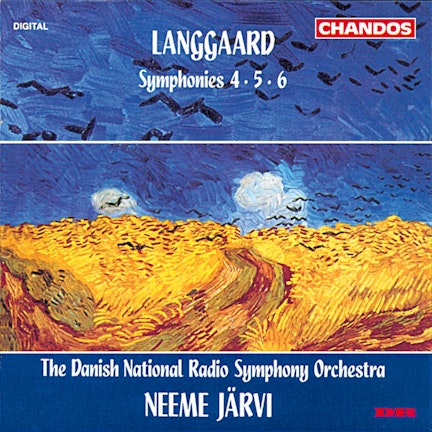
Symphony No. 4, Symphony No. 6, and 'The Music of the Spheres' on this album are live concert recordings from 1981, 1977, and 1980 respectively.
Composer Biography
Rued Langgaard began composing as a child and made his debut as an organist at age twelve, performing and improvising at the Marmorkirken in Copenhagen.
Composer's Artistic Vision
Langgaard's worldview was deeply influenced by apocalyptic prophecies of St. John, which is reflected in the many biblical titles he gave his music.
Compositional Technique
In 'The Music of the Spheres', Langgaard uses a small 'distant orchestra' along with the conventional one and choir, often as an autonomous ensemble rhythmically emancipated from the larger group.
Composer's Artistic Vision
Langgaard believed the musical medium could express the religious extremes of human existence, including the conflict between good and evil, better than any other art form.
Critical Reception
Langgaard's music was largely ignored by the Danish musical establishment during his lifetime, with critics completely ignoring the first performance of his Symphony No. 10.