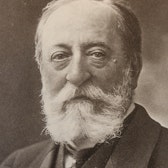
Gabriel Fauré, a student of Saint-Saëns, described his teacher as 'the most complete musician we ever had,' praising his knowledge, technique, sensitivity, and integrity.
Composition History
The Cello Sonata No. 1 in C minor, Op. 32, was the first work to emerge from the new Société Nationale de Musique, making it significant for France.
Critical Reception
Despite some critics calling his music 'rubbishy,' Saint-Saëns was popular in England, performing for Queen Victoria and Queen Alexandra, and receiving commissions like his Third Symphony.
Composition History
Saint-Saëns composed a new finale for his Cello Sonata No. 1 after his mother expressed dislike for the original, incorporating quotes from Meyerbeer's opera L'Africaine.
Compositional Technique
Le Cygne ('The Swan') is part of Le Carnaval des animaux, a 'zoological fantasy' that parodies music by composers like Berlioz, Offenbach, and Rossini, with each movement representing an animal.
Composer Biography
Saint-Saëns was a child prodigy, composing his first piano 'Galop' at age four, his first song at five, and his first symphony at seventeen.
Composition History
Saint-Saëns composed his Cello Sonata No. 2 in F major, Op. 123, at the age of seventy in 1905, making it his first chamber music work in six years.
You might also enjoy...
Mischa Maisky - Après un rêve
Revelação
Songs from the Arc of Life
The French Album
Spezl
Song of the Birds (Le chant des oiseaux)
Mischa Maisky – Rare Recordings
Strauss, Poulenc, & Rihm: Werke für Violoncello und Klavier
Lieux retrouvés: Music for Cello & Piano – Liszt, Fauré, Janáček, Kurtág, Adès