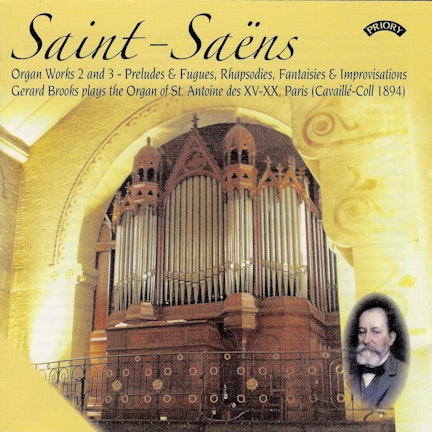
Saint-Saëns, a virtuoso pianist and organist, played at the consecration of several famous Parisian organs, including Saint-Sulpice and Notre-Dame.
Compositional Technique
Saint-Saëns's Bénediction nuptiale was a novelty in organ notation, being the first piece written on five staves instead of the usual three to make ornamental parts easier to read.
Performer Biography
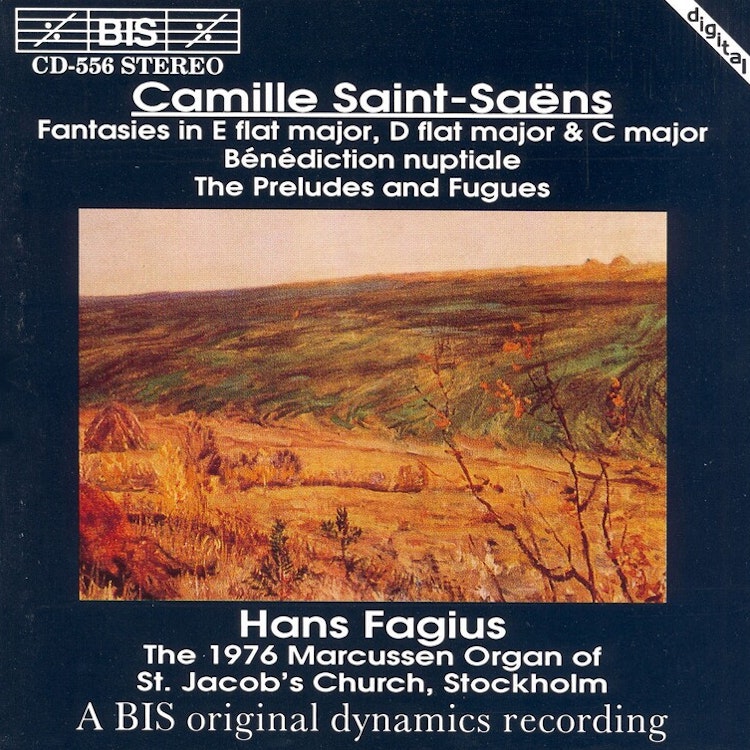
Hans Fagius, the performer on this album, has won prizes in international organ competitions and has given numerous recitals across Europe, the U.S.A., and Australia since the 1970s.
Composition History
Saint-Saëns dedicated his Preludes and Fugues, Op. 99, to three contemporary organists and composers: Charles-Marie Widor, Alexandre Guilmant, and Eugène Gigout.
Critical Reception
Despite his reputation, Saint-Saëns' organ music is often overlooked in biographies, possibly because his image rests more on orchestral works or due to the abundance of other outstanding French organists at the time.
Composer Biography
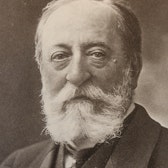
Camille Saint-Saëns was a child prodigy, giving his first concerts at age 11 and winning a first prize for organ playing at the Paris Conservatoire by 1851.
Composer's Artistic Vision
Saint-Saëns was stylistically wide-ranging and keen to learn from other musical styles without becoming a mere imitator, as evidenced by his early subscription to the Complete Bach Edition.
You might also enjoy...
Olsson: Organ Music
Liszt: Famous Organ Works
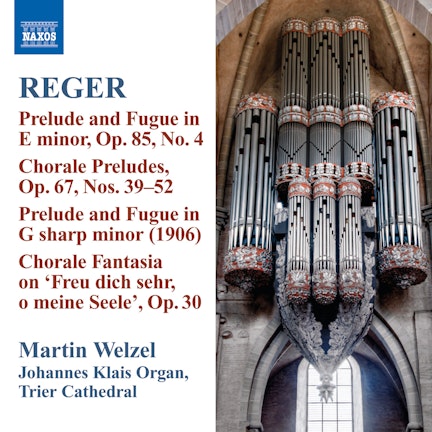
Reger: Organ Works, Vol. 10
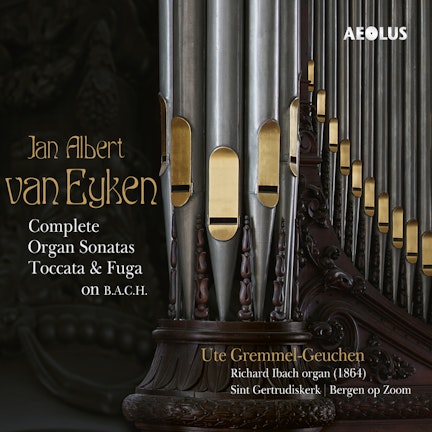
Jan Albert van Eyken: Complete Organ Sonatas
Rheinberger, J.G.: Organ Works, Vol. 7
Introduction, Passacaglia and Fugue by Healey Willan
Franz Schmidt: Organ Works Vol. 2
Cape Town Experience
Organ Works by Berlin Composers
Bach, J.S.: Toccata in C Major, Bwv 564 / Guilmant: Sonata No. 1 in D Minor, Op. 42