Saint-Saens: Piano Concertos Nos. 1 in D Major and 2 in G Minor
5/1/2001, 11 Tracks, 1:10:32
Featuring
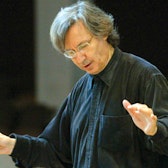
Jean-Jacques Kantorow
Noriko Ogawa
Tapiola Sinfonietta
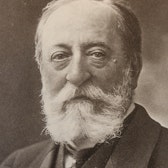
Camille Saint-Saëns
Did you know?
1/7
Composer Biography
Saint-Saëns' organ improvisations were so renowned that figures like Franz Liszt, Clara Schumann, Pablo de Sarasate, and Anton Rubinstein traveled to hear him.
Performer Biography
Noriko Ogawa, the pianist on this recording, won third prize at the 1987 Leeds International Piano Competition and has since achieved renown in Europe, America, and her native Japan.
Composition History
Saint-Saëns composed his Piano Concerto No. 2 in G minor in just seventeen days after learning that Anton Rubinstein, a famous Russian guest conductor, was coming to Paris.
Composer's Artistic Vision
Camille Saint-Saëns was a traditionalist who openly supported traditional forms and expressive means, though not fundamentally opposed to some experimentation.
Instruments
The Suite in D major was originally composed for harmonium, an instrument invented in 1784 by Bohemian organ-builder F. Kirschnik, which was popular in France but fell into disuse by the early 20th century.
Composer Biography
Camille Saint-Saëns, born in 1835, was a child prodigy who won a first prize for organ playing at 16 and became an organist and teacher at 18.
Performer Biography
The Tapiola Sinfonietta, founded in 1988, aimed to distinguish itself from other Finnish municipal orchestras in repertoire and sonority, drawing on Finland's high-level musician training.
You might also enjoy...
Rubinstein: Caprice Russe, Op. 102 - Piano Concerto No. 5 in E flat, Op. 94 - Overture to Der Thurm zu Babel, Op. 80
Rachmaninoff: Piano Concerto No. 2 in C Minor, Op. 18 & Other Works
Rachmaninoff: Orchestral Works
Glazunov: The Piano Concertos
Anton Rubinstein: Piano Concertos Nos. 1 & 2, Pièces caractéristiques, Op.50