Saint-Saëns: Symphonic Poems - Le Carnaval des animaux - L'Assassinat du duc de Guise
11/17/2023, 25 Tracks, 1:33:13
Featuring
François-Xavier Roth
Les Siècles
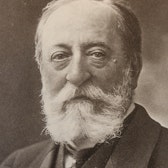
Camille Saint-Saëns
Did you know?
1/6
Cultural Impact
Saint-Saëns's "L'Assassinat du Duc de Guise" (1908) is considered the first film music in history, written for a short silent film.
Recording & Production
This recording features a Pleyel 'double piano' from 1928, an instrument with two keyboards facing each other, which allows two performers to play together.
Composition History
Saint-Saëns composed "Le Carnaval des animaux" as a surprise for his friend, the cellist Charles Lebouc, intending it as a private joke for a Mardi Gras concert.
Compositional Technique
"Le Carnaval des animaux" is a 'grand zoological fantasy' that uses a varied and unusual combination of instruments, including two pianos, two violins, viola, cello, double bass, flute, clarinet, glass armonica, and xylophone.
Composer's Artistic Vision
Camille Saint-Saëns was inspired by Franz Liszt's symphonic poems, which showed him the path to composing works like "Danse macabre" and "Le Rouet d'Omphale."
Interpretation
Les Siècles orchestra aims to recreate not only the instrumental texture of the period but also a certain cultural approach to music, including the enunciation of notes, which is a hallmark of French musical training.
You might also enjoy...
Russian Spectacular
Delius: The Walk to the Paradise Garden; A Song of Summer; Brigg Fair; On Hearing the First Cuckoo in Spring; Paris
Mussorgsky: Pictures at an Exhibition / Borodin: Polovtsian Dances
Hausegger: Orchestral Works
Glazunov: Orchestral Works, Vol. 2
Glazunov: Orchestral Works, Vol. 2
Grzegorz Nowak Conducts Karlowicz
Rimsky-Korsakov: Scheherazade - Capriccio espagnol - Neapolitan Song