Saint-Saëns incorporated passages of improvisation into his Cello Sonata, inspired by his organ playing at Saint Augustine's Church.
Composition History
Saint-Saëns jokingly wrote to Charles Lecocq that he hoped his E minor Trio would "drive to despair all those unlucky enough to hear it."
Composition History
The Cello Sonata in C minor was written in 1872, an 'annus horribilis' for Saint-Saëns, marked by the death of his great-aunt Charlotte Masson who had raised him.
Cultural Impact
The D minor Sonata for 'Piano and Violin' fascinated the writer Marcel Proust, inspiring the fictitious 'Vinteuil's Sonata' in his novel 'À la recherche du temps perdu' (In Search of Lost Time).
Compositional Technique
In his E minor Trio, Saint-Saëns used an arch form, with dramatic outer Allegros, a central Andante, and second and fourth movements in medium tempo, prefiguring techniques used by Hindemith and Bartók.
Composer Biography
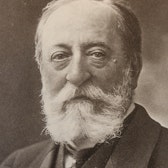
Camille Saint-Saëns, the composer, showed promise as a pianist at the remarkably young age of two and a half.
Composition History
The finale of the Cello Sonata was rewritten by Saint-Saëns after his mother disliked the original, incorporating motifs from her favorite opera, Meyerbeer's 'L'Africaine'.
You might also enjoy...
Helene Liebmann: Violin Sonata - Cello Sonata - Piano Trio
Vilma von Webenau
Suk: Piano Quintet & Piano Quartet
Kuhlau: Piano Quartets (Complete)
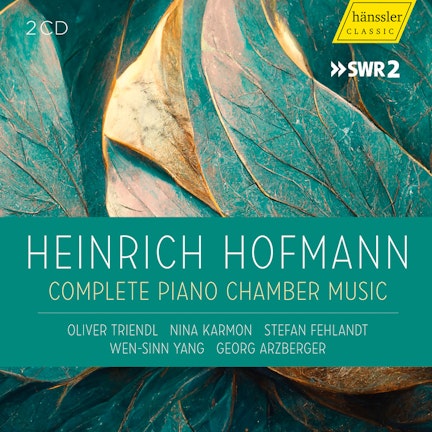
Heinrich Hofmann - Complete Piano Chamber Music
Martha Argerich - Chamber
Hommage à Paul Caro [chamber works]
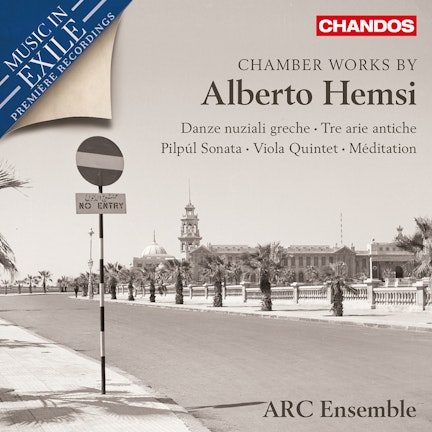
Hemsi: Chamber Works
Duos pour violon et violoncelle
Saint-Saëns: Piano Trios
The Piano Trio Collection - Mendelssohn: Trio No. 2 in C Minor, Op. 66 - Arensky: Trio No. 1 in D Minor, Op. 32 - Turina: Trio No. 1, Op. 35 - Heifetz Remastered
Chamber Music (Bohemian and Hungarian) - Dvorak, A. / Brahms, J. / Liszt, F. / Farkas, F. / Smetana, B.
Chamber Works
Franck: Piano Trio, Op. 22 - Cello & Violin Sonatas