The Third Symphony uniquely incorporates both the organ and the piano into the symphony orchestra, reflecting Saint-Saëns's belief that the symphony should benefit from modern instrumentation.
Instruments
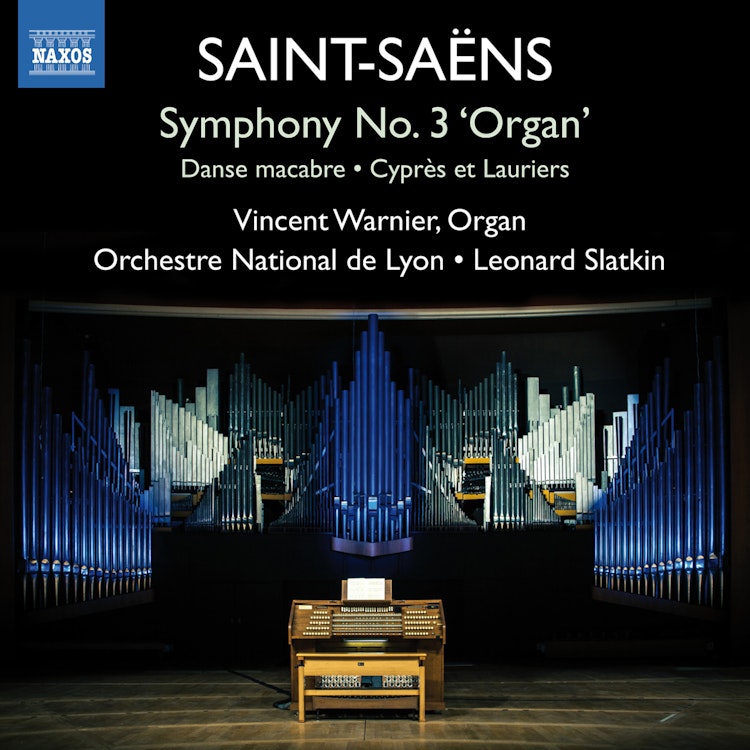
The legendary Trocadéro organ, now housed in Lyon and heard on this recording, was built by Aristide Cavaillé-Coll for the 1878 Paris Expo and has been played by many great musicians.
Composition History
Saint-Saëns's Third Symphony, known as the 'Organ' Symphony, was commissioned by the Royal Philharmonic Society of London, which had also commissioned Beethoven's Ninth Symphony.
Compositional Technique
The Danse macabre, one of Saint-Saëns's four symphonic poems, famously depicts Death as a violinist playing a dissonant tritone, an interval known as the 'diabolus in musica' in the Middle Ages.
Compositional Technique
Saint-Saëns dedicated his Third Symphony to the memory of Franz Liszt, whose compositional techniques, such as thematic transformation and the blending of organ with orchestra, inspired the work.
Composition History
Cyprès et Lauriers, a diptych for organ and orchestra, originated from a commission by Léon Jehin, conductor of the Concerts d'Ostende in Belgium.
Composer Biography
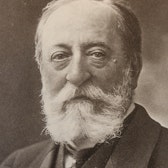
Camille Saint-Saëns, born in 1835 and died in 1921, had a career of rare longevity, performing his first concert at age eleven and his last just weeks before his death.
You might also enjoy...
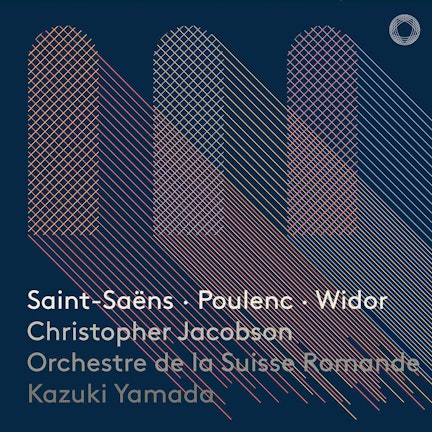
Saint-Saëns, Poulenc & Widor: Works for Organ
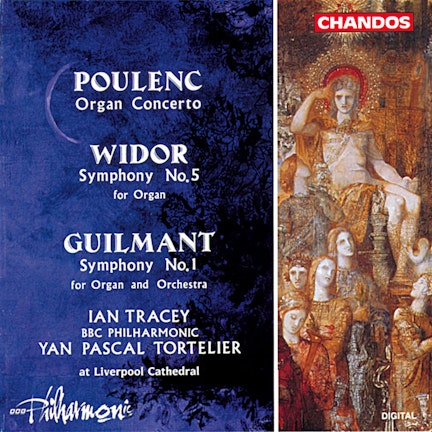
Poulenc: Organ Concerto / Widor: Organ Symphony No. 5 / Guilmant: Organ Symphony No. 1
Dupre: Works for Organ, Vol. 3
David Dahl in Concert
Touching Colours - Organ & Orchestra
Paul Freeman Introduces, Vol. XI
The Five Sacred Trees; etc.
The Five Sacred Trees; etc.
Under tonsättarens taktpinne
The Britannic Organ, Vol. 9
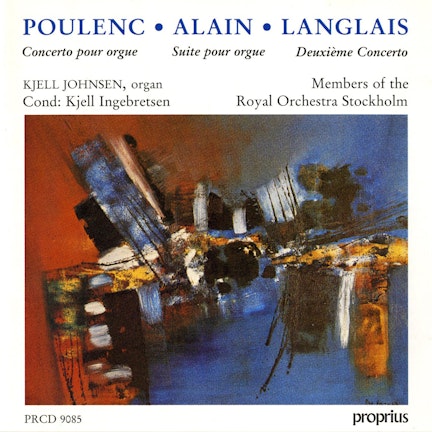
Poulenc: Organ Concerto - Alain: Organ Suite - Langlais: Organ Concerto No. 2