The Introduction et Rondo capriccioso, though popular for decades, saw its popularity wane in the 1960s due to new music technology, as its length was ideal for 78 rpm records but less so for LPs.
Recording & Production
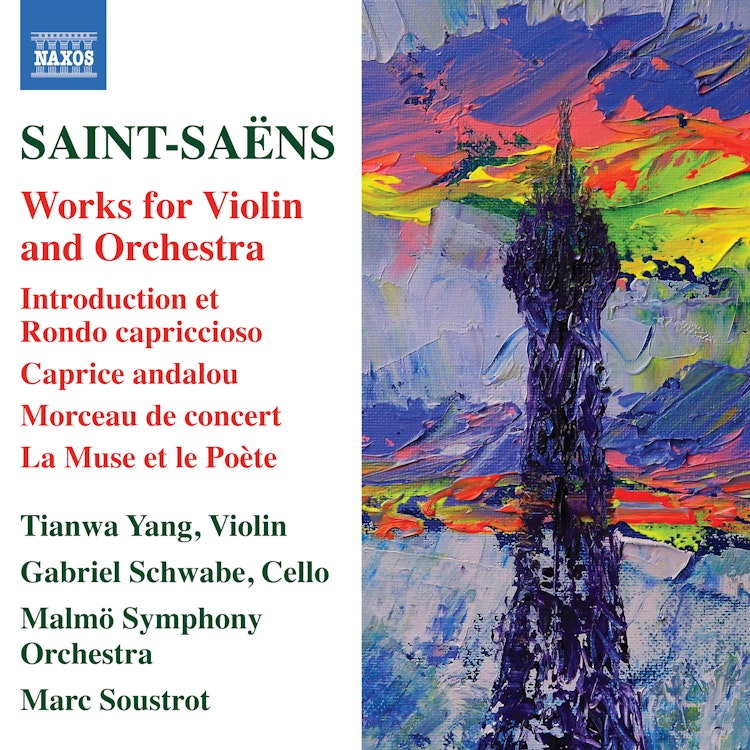
The Malmö Symphony Orchestra and conductor Marc Soustrot began recording the complete works of Camille Saint-Saëns for Naxos in August 2013.
Compositional Technique
Saint-Saëns's La Muse et le Poète, originally conceived as a chamber piece, features a 'conversation' between the violin and cello, consciously reacting against the formal rigor of German music.
Composition History
Many of Saint-Saëns's works for violin, including the Introduction et Rondo capriccioso and his First and Third Violin Concertos, were dedicated to the leading Spanish virtuoso Pablo de Sarasate.
Composer Biography
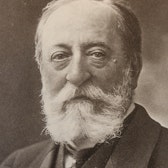
Camille Saint-Saëns, born in Paris in 1835, was a musical prodigy who made his concert debut at age ten, offering to play any of Beethoven's 32 piano sonatas as an encore.
Historical Context
After the Franco-Prussian War (1870-71), Saint-Saëns played a key role in promoting French music by co-founding the Société Nationale de Musique in 1871 to support new French compositions.
Composer's Artistic Vision
Saint-Saëns's perception as a composer changed throughout his lifetime; he championed progressive figures like Wagner and Liszt in his youth, but later adopted a more conservative approach.