Franz Liszt, a Hungarian composer and pianist, explicitly included the instruction "l'accompagnamento dolce quasi arpa" (sweet accompaniment, almost like a harp) in the middle section of his Nocturne 'Les cloches de Genève'.
Album & Artwork
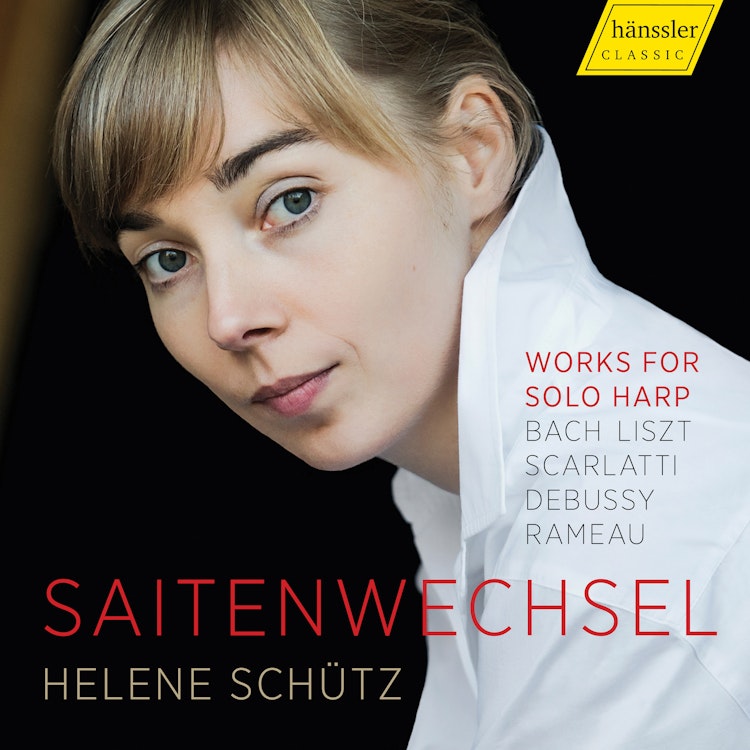
The album title "Saitenwechsel" is a German pun, meaning "change of strings," reflecting that all pieces were originally for piano but are performed on harp.
Performer Biography
Helene Schütz is a co-founder of the ensemble ArcEnCiel (flute, harp) and a founding member of the harp quartet arparlando, one of the few established harp ensembles in Germany.
Interpretation
Helene Schütz, the harpist, believes that playing Bach's keyboard works on the harp results in a sound closer to historical instruments than modern pianos.
Instruments
The harp and a grand piano share the same tonal range, and a harp can be seen as an "up-ended grand piano without either wooden casing or keyboard."
Composition History
The recording features absolute premieres of Franz Liszt's 'Les cloches de Genève' and Johann Sebastian Bach's B-flat major Partita on the harp.
You might also enjoy...
The Glass Effect (The Music of Philip Glass & Others)
Vigh, Andrea: The Sound of Harp
Minimal Harp
Five Minutes for Earth
A New Baroque
Autumn
Pièces pour la harpe: Handel, Bach, Rameau, Mozart, Chopin, Liszt...