Timo Jouko Herrmann, the conductor of this album, is an internationally acknowledged Salieri researcher whose publications are considered standard works on the composer.
Recording & Production
The Heidelberger Sinfoniker, featured on this album, have released over 50 CD recordings, primarily for the hänssler Classic label, many of which have received international awards.
Composer Biography
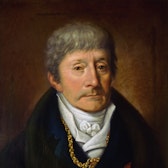
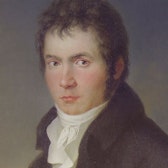
Antonio Salieri, a Kapellmeister to the Viennese court, never charged his students for lessons, and Ludwig van Beethoven took advantage of this for years.
Historical Context
The cantata Habsburg by Salieri, premiered in 1806, served as a farewell to the Holy Roman Empire of the German Nation, which was weakened by the Napoleonic wars and dissolved months later.
Composer's Artistic Vision
Salieri advised his opera composition students to 'paint with a broad brush' rather than getting lost in too many details, a principle evident in Beethoven's early vocal works.
Album & Artwork
Three of the works by Antonio Salieri on this album are world premiere recordings: the Overture to Habsburg, the Overture to L'oracolo muto, and the Finale to La riedificazione di Gerusalemme.
Compositional Technique
In Beethoven's Terzett op. 116, he uses a descending four-note motif that his teacher Salieri frequently employed, which musicologist John A. Rice called the 'Salieri-Wendung' (Salieri-turn).