Satie: Parade, Gymnopédies, Gnossiennes & Other Works for Orchestra
1/26/2024, 47 Tracks, 1:06:04
Featuring
Ronald Corp
New London Orchestra
Erik Satie
Did you know?
1/7
Composition History
Satie's final ballet, Relâche, premiered in 1924 after an initial 'cancellation' where the audience arrived to a dark theatre, and featured an absurd film during the interval.
Composition History
The ballet Parade, a collaboration between Satie, writer Jean Cocteau, artist Pablo Picasso, and choreographer Léonide Massine, premiered in Paris in 1917 and caused a scandal.
Compositional Technique
Satie's Gnossiennes, originally written for piano, were notated without bar lines or time signatures, reflecting his interest in religious chant and monody.
Critical Reception
Erik Satie was initially viewed as a prankster and charlatan, but the avant-garde of the 1950s and 1960s helped establish his correct historical position as a visionary.
Compositional Technique
Satie's score for the ballet Parade is described as 'cubist' and incorporates sounds like typewriters, revolvers, sirens, and clappers.
Interpretation
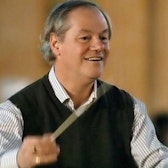
Ronald Corp, the conductor on this album, orchestrated the second Gymnopédie and all three Gnossiennes, using the same chamber orchestra instrumentation as Debussy.
Composition History
Claude Debussy orchestrated two of Satie's Trois Gymnopédies after hearing Satie play them in 1896, and they premiered at a Société Nationale concert in 1897.
You might also enjoy...
Copland: Billy The Kid; El Salon México
Gould: Spirituals; Fall River Legend; Barber: Medea
Poulenc: Orchestral Works
Delibes: Coppélia / Chopin: Les Sylphides / Gounod: Faust Ballet Music
All These Lighted Things
Tchaikovsky, P.: Waltzes From Eugene Onegin / Nutcracker / Swan Lake / Sleeping Beauty / Serenade / Symphony No. 5
Verdi: Ballet Music from the Operas
Prokofiev: Ivan the Terrible; Romeo and Juliet
Poulenc: Les Biches / Ibert: Divertissement / Milhaud: Le Boeuf Sur Le Toit
Prokofiev: Romeo and Juliet Suites Nos. 1 and 2 - Pushkin Waltz No. 2