This recording uses two rare, playable 17th and 18th-century four-course mandolins from a private collection, strung with historically reconstructed gut strings.
Composition History
Filippo Sauli's Six Partitas for solo mandolin represent a significant shift in the Baroque mandolin repertoire, moving beyond simple dances to more extended musical forms.
Recording & Production
This album is the first complete recording of Filippo Sauli's Six Partitas for solo mandolin, performed on period instruments with historical performance practice.
Compositional Technique
Sauli's Partitas use an unusual 'scordatura' (non-standard tuning) for the mandolin, lowering the fourth course from E to F, which is unique in Italian solo Baroque mandolin literature.
Composer Biography
Filippo Sauli, the composer, was a theorbist of Florentine origin who worked at the Habsburg court in Vienna during the early 18th century.
Performer Biography
Davide Rebuffa, the performer, is a multi-instrumentalist and researcher who has founded several early music ensembles and co-founded the Early Mandolin Academy.
Historical Context
The mandolino used in the 17th and early 18th century was played with finger-style technique, not a plectrum, which was only introduced later with the 'Neapolitan' mandolin.
You might also enjoy...
J.S. Bach: Violin Sonatas & Partitas
Beifang 1
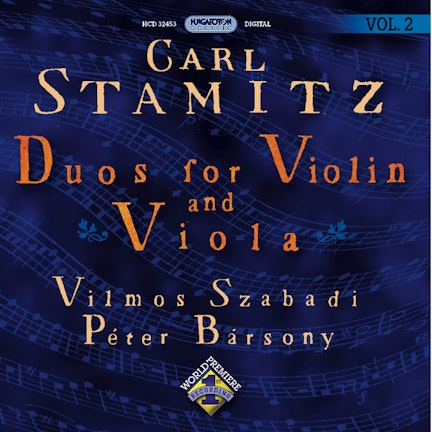
Stamitz, C.: Duos for Violin and Viola, Vol. 2
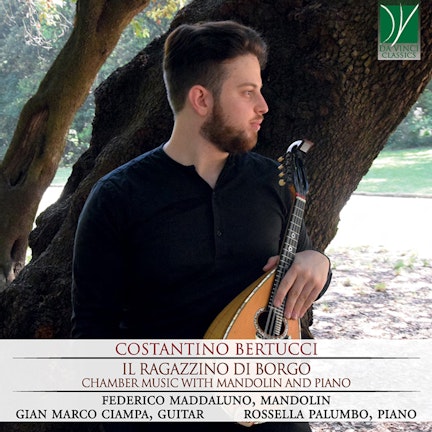
Bertucci: Il Ragazzino di Borgo: Chamber Music with Mandolin and Piano
Group 180
Hoffmann: Mandolin Quartets
Jean-Pierre Rampal Plays Scott Joplin
Suites, Sonatas, Airs & Dances
Conlon Nancarrow: Studies for Player Piano, Vol. V
Avi Avital: The Verbier Recital
Quintessence Saxophone Quintet: To the Point
Conlon Nancarrow: Studies for Player Piano, Vol. IV
Paganini: Musica per mandolino e chitarra del primo Ottocento