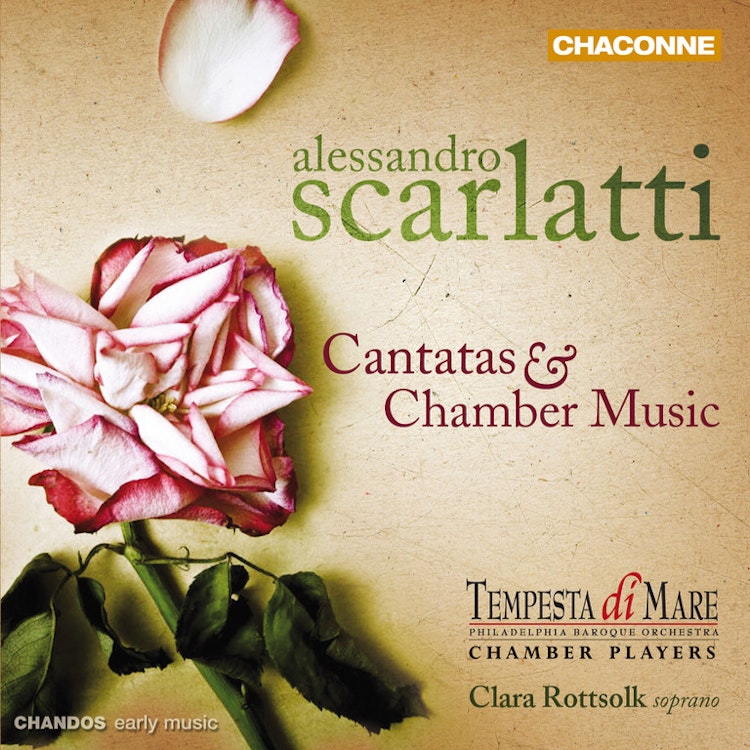
Alessandro Scarlatti, born in Palermo in 1660, moved to Rome at age twelve, and by eighteen had his first church job, was married, had a son, and produced his first opera.
Recording & Production
This Chandos recording uses 24-bit technology, offering a dynamic range up to 48 dB greater and 256 times the resolution of standard 16-bit recordings.
Historical Context
The papal prohibition of opera in Rome during much of Alessandro Scarlatti's time there created ideal conditions for him to develop his musical gifts through cantatas and serenatas commissioned by Roman artistic patrons.
Composer Biography
Alessandro Scarlatti's family frequently relocated due to his sisters' public scandals, including a secret marriage to a cleric and possible ties to a group of female political power-brokers called the Puttane Commedianti.
Composer's Artistic Vision
Alessandro Scarlatti's instrumental music, like his vocal music, prioritizes intricate interweaving of voices and subtle detail over raw virtuosity.
Critical Reception
Alessandro Scarlatti was highly regarded in his time, with composer Johann Adolf Hasse calling him 'the greatest master of harmony of Italy, which is to say of the whole universe'.
Compositional Technique
Alessandro Scarlatti is credited with codifying the standard high-baroque da capo (A-B-A) aria form in the late 17th century.
You might also enjoy...
Disperato Amore
Marcello: Lo Speccio della Nostalgia
Sammartini: Pianto Degli Angeli Della Pace (Il) / Symphony in E-Flat Major
Albinoni: 12 Cantatas for Soprano and Contralto, Op. 4