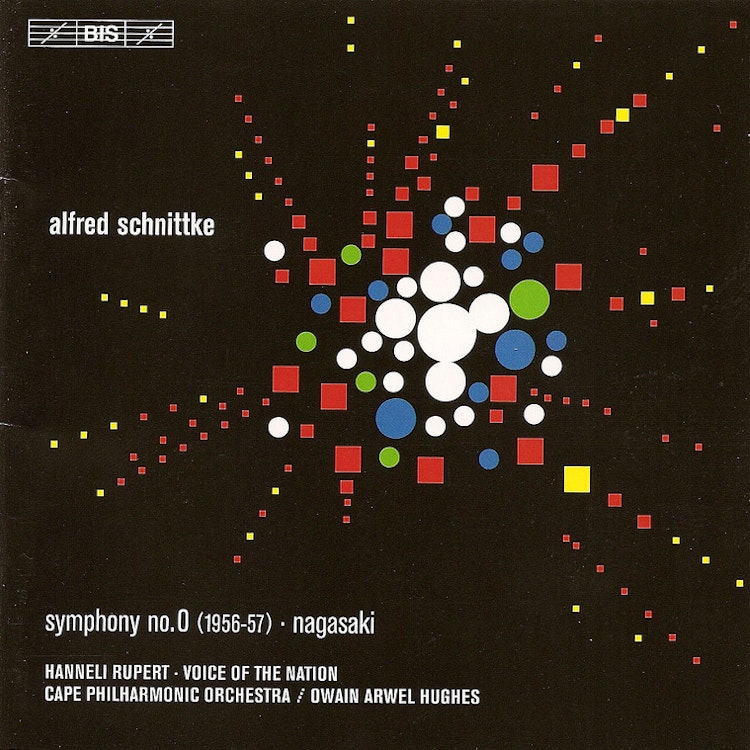
Schnittke's oratorio Nagasaki was harshly criticized by the Composers' Union, accused of 'expressionism' and 'forgetting the important principles of realism in music,' and was not recommended for public performance.
Recording & Production
The manuscript scores for Symphony No. 0 and Nagasaki had many omissions and unclear passages, requiring the artistic executive of the Cape Philharmonic Orchestra to go to Moscow to compare them with surviving orchestral parts.
Composer's Artistic Vision
Schnittke believed in the existence of important 'ideas of the time' that composers might or should share, explaining similarities in his early Symphony to Shostakovich's music.
Notable Performances
Nagasaki received its first public performance in Cape Town on November 23, 2006, almost half a century after its creation, at the Cape Town International Summer Music Festival.
Composition History
Schnittke's Symphony No. 0 and the oratorio Nagasaki were composed while he was a student at the Moscow Conservatory, with Nagasaki serving as his graduation piece.
Composer Biography
Alfred Schnittke, considered the most important Russian composer after Shostakovich, wrote more than half of his major compositions during his last thirteen years while gravely ill after a series of strokes.
Compositional Technique
The oratorio Nagasaki calls for a very large orchestra, including eight horns, four of each woodwind instrument, a percussion battery with a 'termenvox' (theremin), two harps, and a separate group of keyboards.
You might also enjoy...
Hamerik, A.: Symphony No. 7 / Requiem
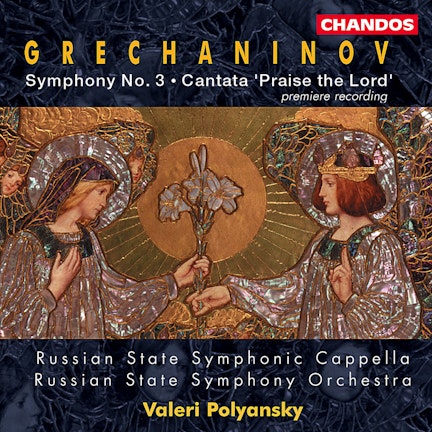
Grechaninov: Symphony No. 3 / Cantata, "Praise the Lord"
Stravinsky: Symphony of Psalms - Poulenc: Gloria, FP 177
Verdi: Quattro pezzi sacri - Stravinsky: Symphony of Psalms