The harmony and form of Schnittke's Symphony No.2 are constructed according to the principle of a cross, where two intermingling, asymmetrical chords create a visual cross on the score.
Composition History
Alfred Schnittke's Symphony No.2 was inspired by his visit to the cold, dark baroque church of St. Florian in Austria, where he heard a small choir singing an "invisible mass."
Notable Performances
Alfred Schnittke's Symphony No.2 premiered in London on April 23, 1980, performed by the BBC Symphony Orchestra and Chorus, conducted by Gennady Rozhdestvensky.
Performer Biography
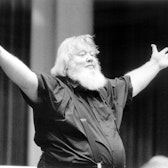
Leif Segerstam, the Finnish composer and conductor on this recording, is known for interpreting his own compositions and has written 26 string quartets and 6 violin concertos, reflecting his origins as a violinist.
Performer Biography
The Mikaeli Chamber Choir, formed in 1972 by Anders Eby, is one of the leading vocal ensembles in the Nordic countries, famed for both major Bach works and demanding modern repertoire.
Composition History
The BBC Symphony Orchestra commissioned Schnittke's Symphony No.2, with conductor Gennady Rozhdestvensky suggesting a work connected to St. Florian and dedicated to Bruckner.
Composer's Artistic Vision
Schnittke conceived his Symphony No.2 as an "invisible mass" – a symphony set against a chorale background, with its movements following the traditional order of the mass.