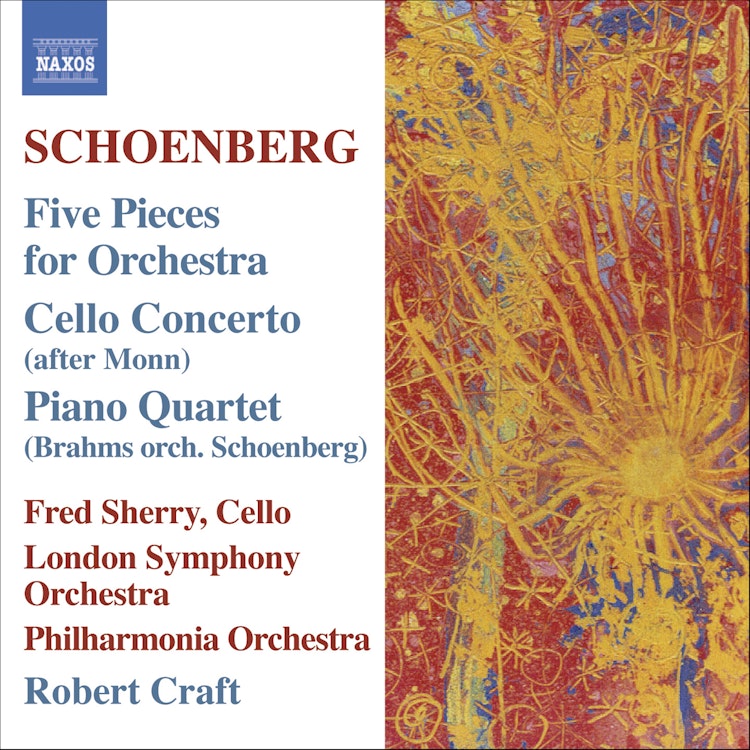
Schoenberg's Cello Concerto, though based on an 18th-century work, aims for a style closer to Haydn and Brahms, avoiding atonality and adhering to older rules of harmony.
Composer's Artistic Vision
Arnold Schoenberg, the composer, believed that art should express the unconscious and that music could convey everything without the need for words or titles.
Composition History
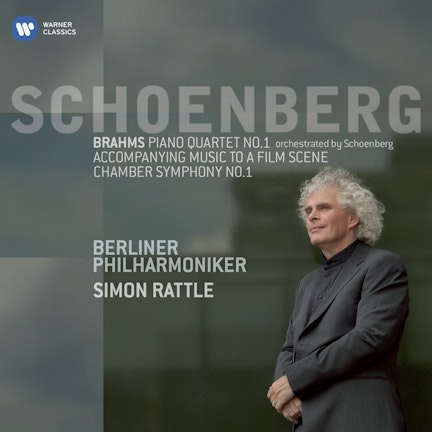
Schoenberg orchestrated Brahms's Piano Quartet in G minor because he liked the piece, felt it was seldom played, and was often performed badly, obscuring the string parts.
Interpretation
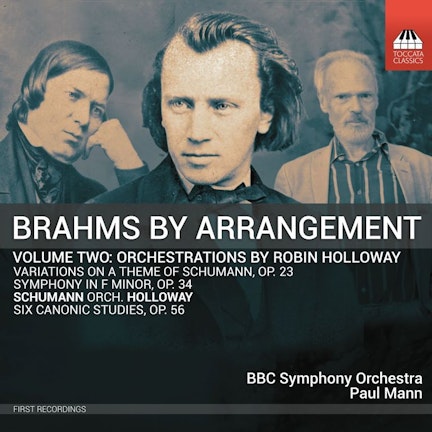
In orchestrating Brahms's Piano Quartet, Schoenberg aimed to remain strictly in Brahms's style and adhere to his compositional laws, based on his nearly 50 years of acquaintance with Brahms's work.
Composer Biography
Schoenberg's Cello Concerto, freely adapted from Georg Matthias Monn's 1746 concerto, was composed in a single creative burst over about a month in late 1932 and early 1933.
Performer Biography
Fred Sherry, the cellist on this recording, is known for introducing audiences to contemporary music and has collaborated with many notable composers, including Babbitt, Berio, and Carter.
Composition History
Schoenberg reluctantly added titles to his Five Orchestral Pieces at the request of his publisher, stating that music itself already conveyed everything necessary.
You might also enjoy...
Alfven: 3 Swedish Rhapsodies
Simon Rattle Edition: The Second Viennese School
Hindemith / Strauss / Schoenberg / Ravel
Hovhaness, A.: Ode To the Temple of Sound / Symphony No. 10 / Floating World / Meditation On Zeami