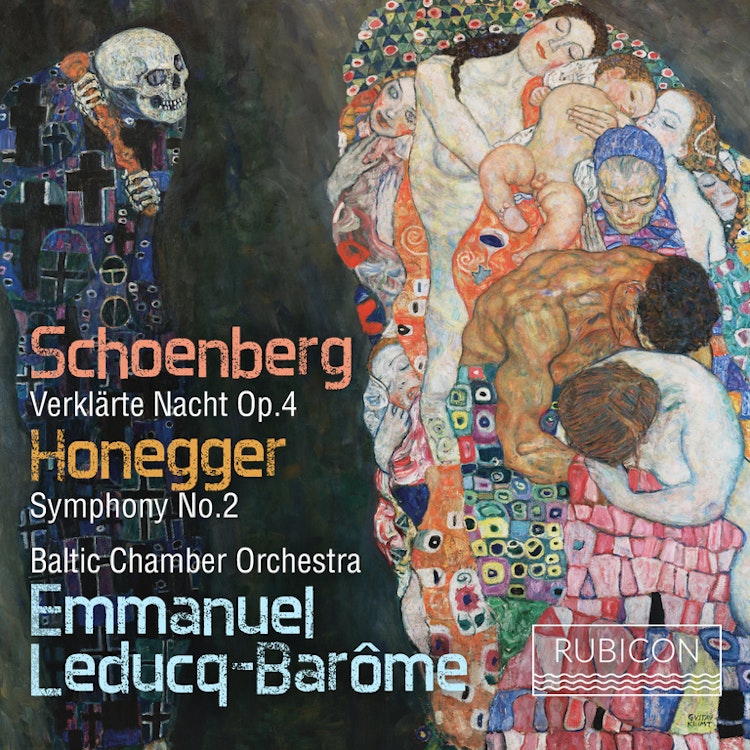
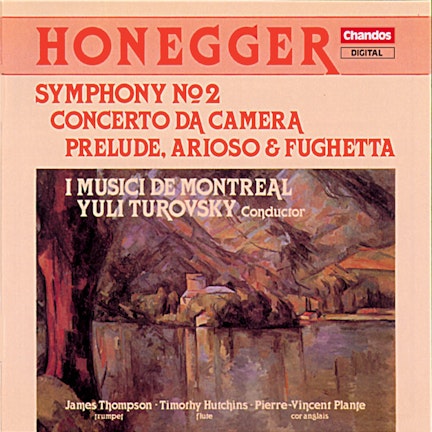
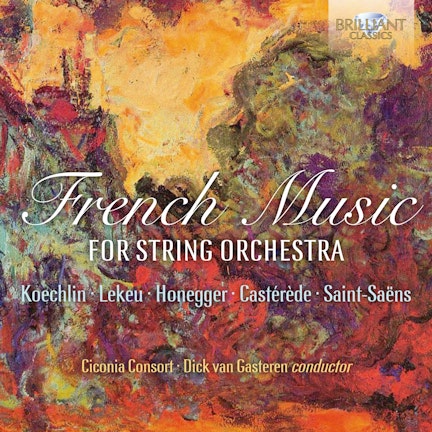
Honegger's Symphony No.2 achieves its anguished character by generally avoiding consonant intervals of thirds and sixths, and features a final chorale-style theme with violins doubled by an ad libitum trumpet.
Notable Performances
The second performance of Honegger's Symphony No.2 in Paris under Charles Munch had an electrifying effect on the audience with its trumpet-capped chorale, which seemed to promise victory to the still-occupied city.
Historical Context
Honegger composed his Second Symphony during the German occupation of Paris, choosing to stay in the city despite his music being banned by the Nazis as 'leftist'.
Composer's Artistic Vision
Alexander von Zemlinsky, Schoenberg's counterpoint teacher and later brother-in-law, inspired Schoenberg's love for Wagner's music and introduced him to new literary works.
Composition History
Arthur Honegger's Symphony No.2 was commissioned by Paul Sacher in 1936 for the tenth anniversary of his Basel Chamber Orchestra, though it was completed five years later.
Composition History
Schoenberg's Verklärte Nacht was inspired by a poem of the same name by Richard Dehmel, depicting a man and woman walking through a moonlit wood.
Composer Biography
Arnold Schoenberg, born in Vienna in 1874, was largely self-taught, learning his craft by orchestrating operettas and playing cello in various ensembles.
You might also enjoy...
Vaughan Williams: Symphony No. 8; Partita for Double String Orchestra
Schulhuff, Haas, Klein & Ullmann: Orchestral Works
Copland: Symphony No. 3; Quiet City
Vaughan Williams: Symphony No. 4 & Fantasia on a Theme by Thomas Tallis
Schönberg: Verklärte Nacht & Kammersymphonie
Górecki: Symphony No. 3 - 3 Olden Style Pieces
The Copland Collection: Early Orchestral Works (CD #1: 1923 - 1928 & CD #2: 1929 - 1935)