Arnold Schoenberg viewed the creation of Pierrot lunaire as a step towards a new mode of expression, where sounds conveyed 'an almost animalistic and immediate expression of sensual and psychological emotions'.
Composition History
Arnold Schoenberg's Pierrot lunaire was composed at the same time as Igor Stravinsky's The Rite of Spring, another highly original work of the early 20th century.
Compositional Technique
Pierrot lunaire uses Sprechgesang, a 'speech-song' technique with notated pitches that are not precisely sung, a method pioneered by Engelbert Humperdinck.
Composition History
The actress Albertine Zehme commissioned Arnold Schoenberg to compose Pierrot lunaire, offering him a substantial fee of 1,000 marks.
Critical Reception
Although critics were perplexed by Pierrot lunaire at its premiere, the public was enthusiastic, and it quickly gained admirers among composers like Igor Stravinsky, Maurice Ravel, Francis Poulenc, and Edgard Varèse.
Composition History
Arnold Schoenberg composed Ode to Napoleon Buonaparte in 1942, motivated by the moral duty of intellectuals to oppose tyranny during World War II.
Notable Performances
The premiere of Pierrot lunaire involved 25 rehearsals, with the public performance taking place a week after a private showing in Berlin.
You might also enjoy...
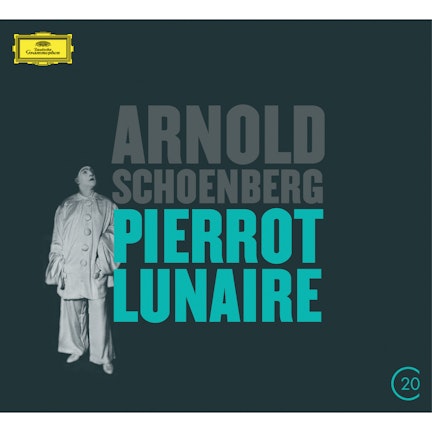
Schoenberg: Pierrot Lunaire
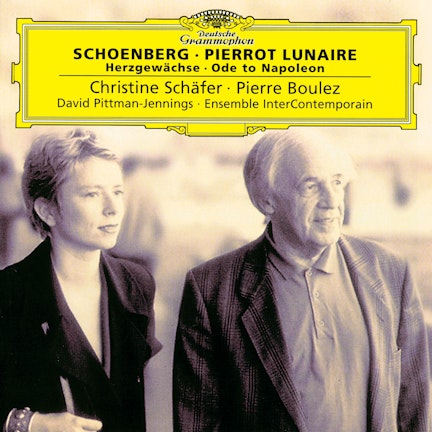
Schoenberg: Pierrot Lunaire; Herzgewächse; Ode to Napoleon
Mönch von Salzburg: 14th Century Lieder
Turtle Dreams
Camino de Santiago: Medieval Music on the Way of St. James
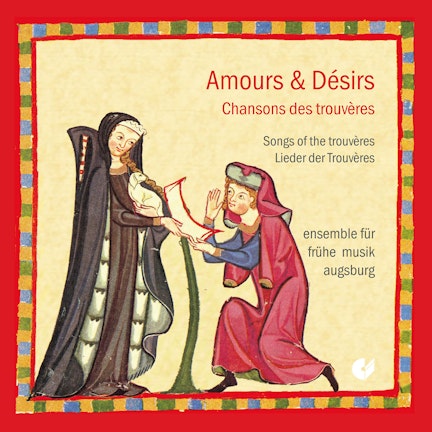
Amours & Désirs: Chansons des trouvères
Winbeck - Lütge - Schneid: Chamber Music
Stravinsky: L'Histoire du soldat
Archivo de Guatemala: Music from the Guatemala City Cathedral Archive
Serenata passacaglia
Donald Womack: Walk Across the Surface of the Sun
Capstone Collection: The McLean Mix: Fantasies for Adults and Other Children