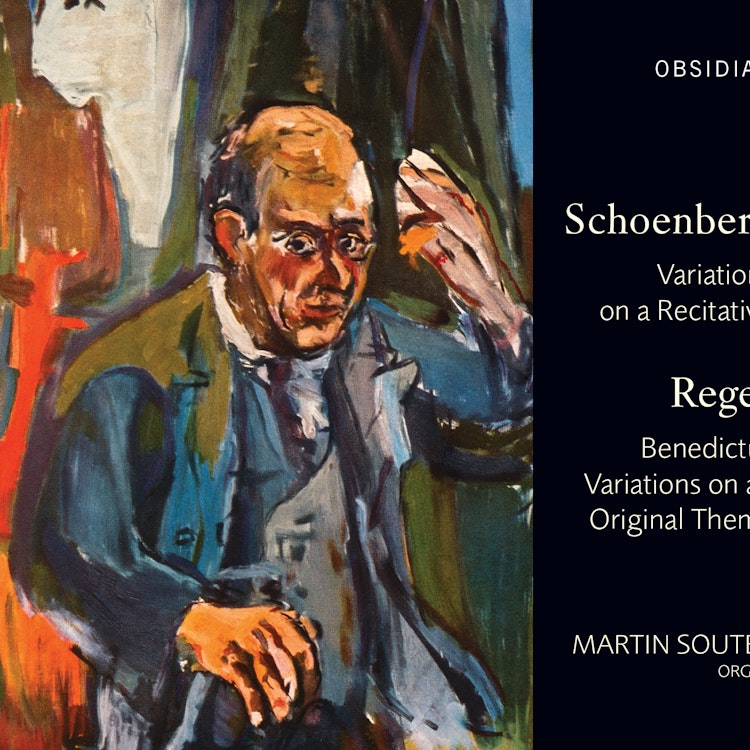
Schoenberg: Variations on a Recitative - Reger: Benedictus - Variations on an Original Theme
7/2/2013, 7 Tracks, 1:03:30
Featuring
Martin Souter
Arnold Schoenberg
Max Reger
Did you know?
1/7
Recording & Production
This recording has a very wide dynamic range, and listeners may hear blower noise and occasional mechanical noises from the organ, particularly during registration changes.
Composer Biography
Arnold Schoenberg, arguably the most important composer of the 20th century, was one of the first to relinquish tonality in its conventional sense.
Compositional Technique
Schoenberg developed a system of serial music where all 12 chromatic notes of the scale had equal value, arranged into a 'note row' that offered him new artistic freedom.
Composition History
Schoenberg's Variations on a Recitative was commissioned as part of an extensive 'Contemporary Organ Series' by American music publisher WM Gray, after he abandoned an earlier serial organ sonata.
Interpretation
Schoenberg indicated specific pitches he wished to hear in his organ work, even if they were not conventionally playable, requiring the organist Carl Weinrich to realize his intentions.
Instruments
The organ used for this recording is the 1928 Ernest M. Skinner organ at Princeton University Chapel, which was restored in 1991 by NP Mander to its original specifications.
Compositional Technique
Max Reger's compositional technique, though often criticized for 'too many notes', owes much to the virtuoso keyboard music of Liszt and the powerful organs of his time, like the Sauer organ in Berlin Cathedral.