Wilhelm Müller's poetry cycle, which Schubert set to music, was published in 1820 under the title 'Die schöne Müllerin (im Winter zu lesen)' (The Fair Maid of the Mill, to be read in Winter).
Composition History
The popular Italian opera La molinara by Giovanni Paisiello, translated into German as Die schöne Müllerin, served as a model for the liederspiel that inspired Schubert's cycle.
Composer's Artistic Vision
In Die schöne Müllerin, Schubert consciously juxtaposes human fate with the forces of nature, such as the stream, without resorting to a fairytale-like naivety.
Performer Biography
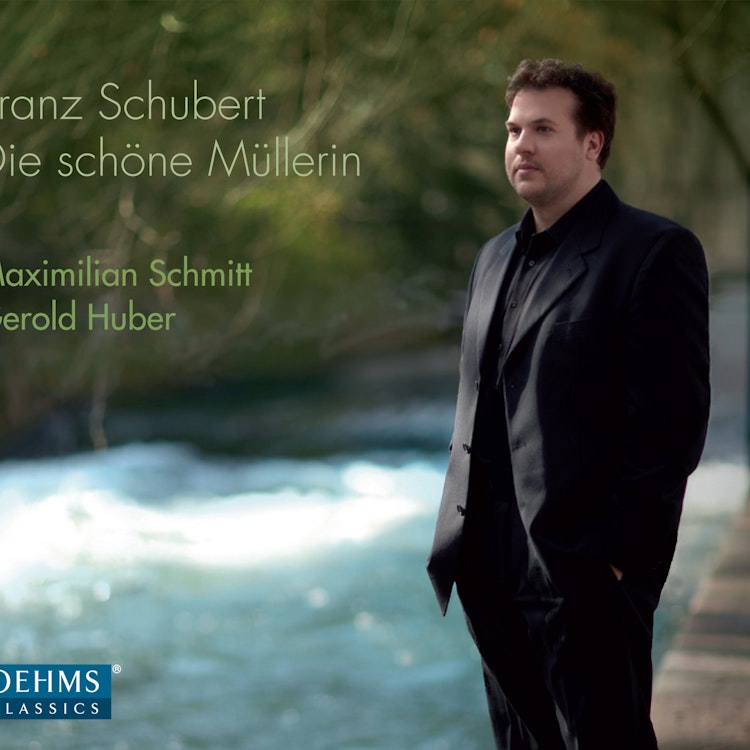
Maximilian Schmitt, the tenor on this recording, began his musical journey as a young member of the Regensburger Domspatzen, a renowned German cathedral boys' choir.
Compositional Technique
Schubert retained the exact chronological order of Wilhelm Müller's poems but omitted some, including the prologue and epilogue, to focus on the inner monologue of the journeyman miller.
Performer Biography
Gerold Huber, the pianist on this recording, studied piano in Munich and attended the lied class of the famous baritone Dietrich Fischer-Dieskau in Berlin.
Composition History
Schubert's song cycle Die schöne Müllerin (The Fair Maid of the Mill) dates back to 1816, when poets and musicians met to create a liederspiel (a popular early 19th-century genre).
You might also enjoy...
Franz Schubert: Die Schone Mullerin (Siegfried Lorenz, Norman Shetler)