Johann Michael Vogl, the baritone who premiered many of Schubert's songs, adapted the music to his aging voice by adding rests, embellishments, and even rearranging entire vocal lines.
Interpretation
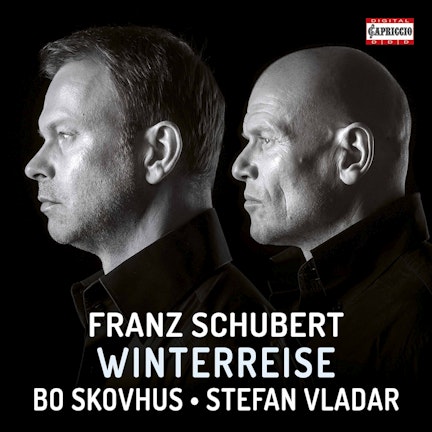
The performers on this album diverge from the 'Urtext' by introducing different notes, embellishments, interpolated recitatives, and additions, drawing on Schubert's original sketches.
Composer's Artistic Vision
For the performers on this album, Winterreise is not straightforward or definitive, but rather a work that asks more questions than it provides answers, making it relevant for today.
Composer Biography
Wilhelm Müller, the poet whose texts Schubert set, was a tailor's son who used art for political rebellion, writing engaged poems for Greek freedom fighters and linking poetry with politics.
Critical Reception
Schubert's Winterreise was initially met with an "almost frightening" reception by his friends due to its audacity and energy, with Franz von Schober only liking "Der Lindenbaum."
Interpretation
The performers advocate for more spontaneity and individuality in performance, inspired by the listening habits of Schubert's day, and incorporate improvisation and a free-handed approach to the historical material.
Instruments
The recording features a Pianoforte Anonymus from Eastern Germany, circa 1830, with a Viennese action and three pedals, restored by Gert Hecher and Karsten Skierawski.