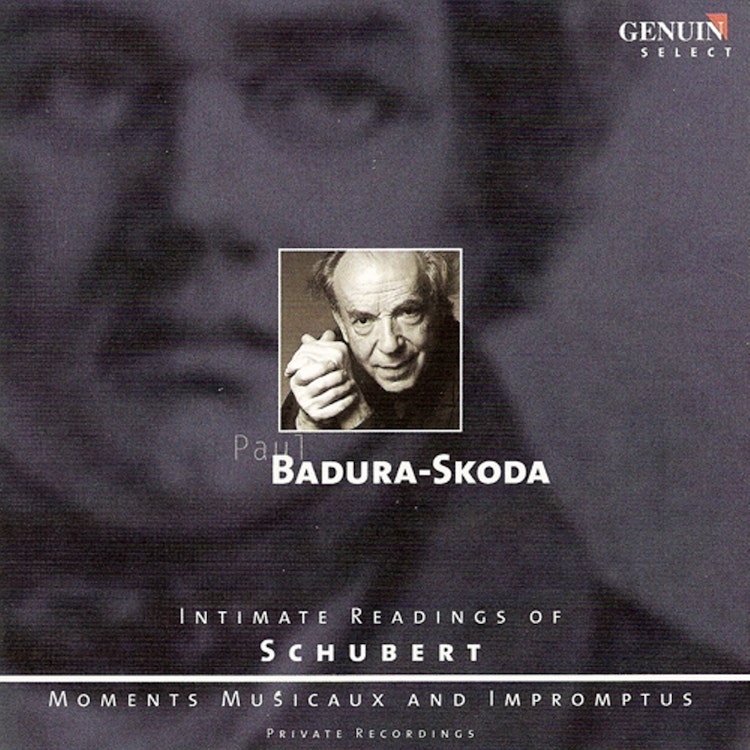
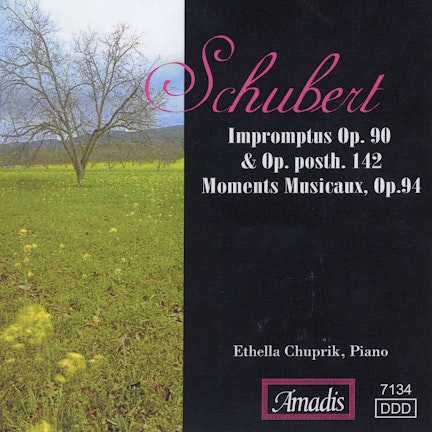
Schubert, F.: 6 Moments Musicaux / Allegretto, D. 915 / Impromptus, Opp. 90 and 142
1/1/2006, 15 Tracks, 1:35:25
Featuring
Paul Badura-Skoda
Franz Schubert
Did you know?
1/7
Compositional Technique
The Impromptus D 935, while perhaps less original in form than D 899, include one of the most beautiful pieces in piano literature, featuring an 'endless loving dialogue' between high and low registers.
Composition History
Schubert's Impromptus were given their unpretentious title, possibly borrowed from contemporary Vorisek, in the hope of earning money from their sale.
Compositional Technique
The fourth Impromptu, a brilliant and virtuosic piece, features many cross-rhythms (two against three) reminiscent of a Bohemian 'Furiant' dance.
Critical Reception
Robert Schumann, despite his admiration for Schubert, completely misunderstood the third Impromptu, calling it 'variations over a meager theme' lacking invention and fantasy.
Composition History
During Schubert's lifetime, only the first two Impromptus were published, as a publisher rejected the second group for being 'too difficult' for Parisians.
Composer Biography
Franz Schubert, a master of art song, turned to composing solo piano works relatively late in his life.
Critical Reception
The publisher Haslinger transposed the third Impromptu to G major and altered its harmony 29 years after Schubert's death, likely for sales, a version still played by some pianists today.
You might also enjoy...
Schubert: Impromptus - Ländler
SCHUBERT, F.: Impromptus, Opp. 90 and 142 (Zechlin, A. Schmidt)
Llŷr Williams: Schubert, Vol. 4
Schubert: Impromptus (Complete)
Schubert: Impromptus, D. 899, Op. 90 & D. 935, Op. 142