The four Impromptus, when performed together, create the structure and drama of a large, four-movement sonata, evident in their tonal progression from F minor to A-flat major, B-flat major, and back to F minor.
Composer Biography
Schubert's complex personality was shaped by the early death of his mother, an overpowering father who was also his schoolmaster, and severe psychological disorders.
Critical Reception
Until the early 20th century, Schubert was often seen as a naive, Biedermeier musician, but a different understanding emerged before World War I, partly due to pianist Conrad Ansorge.
Composer's Artistic Vision
Theodor W. Adorno, a young philosopher, interpreted Schubert as an 'antipode to Beethoven,' countering Beethoven's goal-oriented musical time with the idea of a static 'landscape' in Schubert's music.
Performer Biography
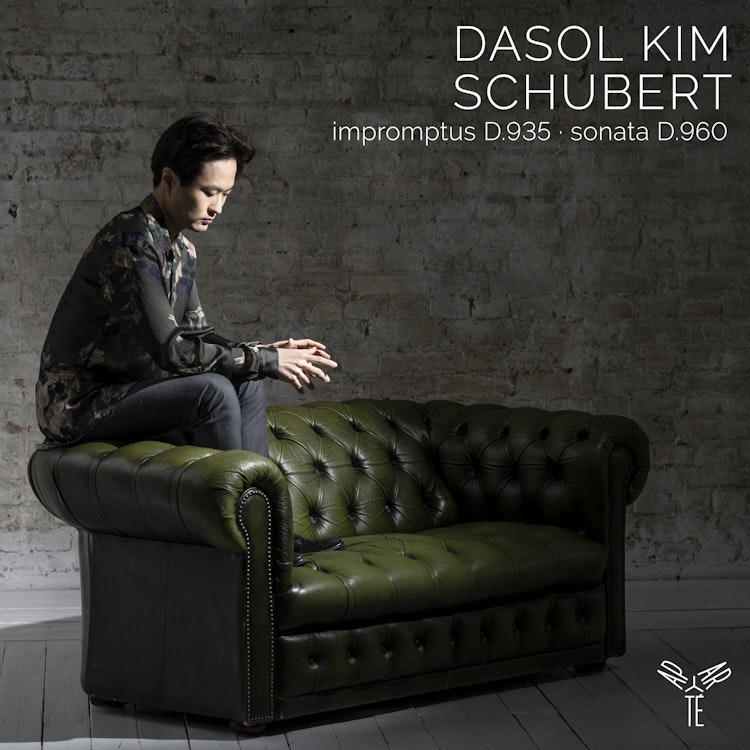
Pianist Dasol Kim's very first public performance as a young pianist was a work by Franz Schubert, leading to a special connection with the composer.
Composer Biography
Franz Schubert wrote a text titled 'My Dream' in 1822, around the time he was composing his Unfinished Symphony, which reflects his complex personality.
Composition History
The works on this album, Schubert's second series of Impromptus and his final Piano Sonata in B-flat major, were completed only about six weeks before his death.
You might also enjoy...
Ingrid Haebler plays
Franz Schubert (Sonate B-Dur, D 960 - Vier Impromptus, D 935)
Schubert : Piano Sonata No.21 & 4 Impromptus
Schubert: Sonata in C Minor, D. 958, 4 Impromptus, D. 935 & Rondo, D. 951
Schubert: Piano Works
Franz Schubert: Klavierduo
Schubert: Piano Music
Schubert: The Late Piano Sonatas
Schubert: Piano Sonatas Nos. 13 and 21 - Wanderer Fantasy
Schubert: Sonatas D784 & 960 - Grazer Fantasy D605A