Schubert: Late String Quartets. G Major & C Minor 'Quartettsatz'
10/29/2021, 6 Tracks, 1:14:17
Featuring
Lucy Russell
Marcus Barcham Stevens
Alan George
Sally Pendlebury
Fitzwilliam String Quartet
Franz Schubert
Did you know?
1/7
Interpretation
The Fitzwilliam String Quartet chose to recognize Schubert as a nineteenth-century composer, influencing their decision on whether trills should begin on the upper note or the main note.
Composition History
Schubert's C minor 'Quartettsatz' is an incomplete composition, similar to his more famous 'Unfinished' Symphony No. 8.
Composer's Artistic Vision
The G major string quartet, composed two years after Schubert's letter to Kupelwieser, is considered unusually symphonic in its gestures, reflecting Schubert's strong commitment to the symphony form.
Composition History
Schubert, the composer, wrote to his friend Leopold Kupelwieser in 1824, stating his intention to write a third string quartet to prepare for a 'grosse Symphonie'.
Instruments
For this recording, the Fitzwilliam String Quartet used 'upgraded' eighteenth-century Italian instruments, strung with nineteenth-century Viennese-style thick gut.
Interpretation
The continuous vibrato common today was not yet established by 1826; it was used as an expressive device for decoration, ornament, emphasis, or increasing intensity.
Performer Biography
The Fitzwilliam String Quartet is one of the longest established string quartets in the world, formed in October 1968, and was the first group to record all fifteen Shostakovich quartets.
You might also enjoy...
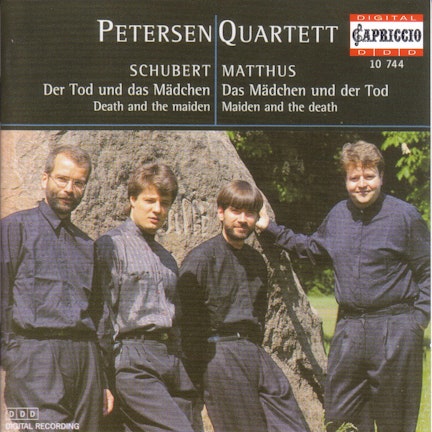
Schubert, F.: String Quartet No. 14, "Death and the Maiden" / Matthus, S.: Das Madchen Und Der Tod"
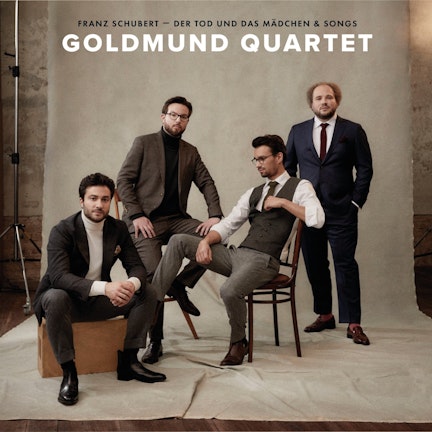
Der Tod und das Mädchen & Songs
Adorations
Beethoven, Schubert, Webern & Szymanowski: Vienna
Beethoven, Schubert, Webern & Szymanowski: Vienna
Cycles: Beethoven, Schubert, Andriessen and Cage (live in Renswoude, Nederland 2021)
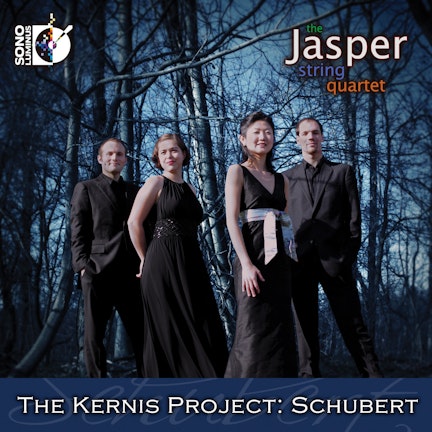
The Kernis Project: Schubert
Bartók & Schubert: String Quartets
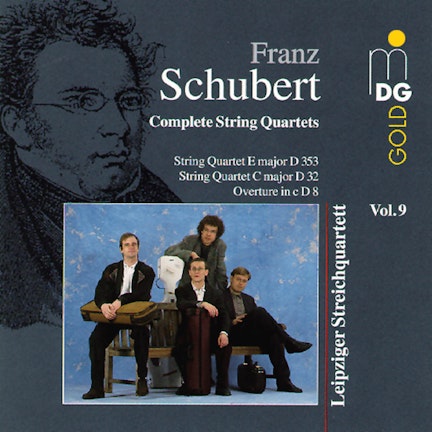
Schubert: Complete String Quartets Vol. 9
What Remains
Schubert / Mendelssohn / Clarke: String Quartets
Wolf: String Quartet in D Minor, Intermezzo in E-Flat Major & Serenade in G Major "Italienische"