Schubert: Octet for Winds and Strings / Trio for Violin, Viola and Cello
1/1/2010, 7 Tracks, 1:17:56
Featuring
Les Chambristes du Canada
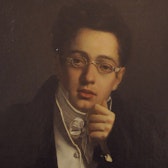
Franz Schubert
Did you know?
1/7
Compositional Technique
Schubert's Octet shares many similarities with Beethoven's Septet, including the same number of movements and almost identical structures, both modeled on the 18th-century classical serenade.
Composition History
Schubert's first String Trio, D 471, was written when he was only nineteen years old, primarily for family musical evenings where he played the viola.
Composer's Artistic Vision
The Octet's cheerful mood reflects Schubert's temporary relief from the symptoms of syphilis, and its fourth movement theme comes from a duet about imaginary love from his failed Singspiel, Die Freunde von Salamanka.
Composition History
The Octet, D 803, was commissioned in 1824 by Count Ferdinand von Troyer, chief steward of Archduke Rudolph, to be a companion piece to Beethoven's popular Septet.
Composer Biography
Franz Schubert's chamber music was largely neglected during his lifetime, despite now being considered among the best-loved repertoire.
Critical Reception
Despite its quality, Schubert's Octet was only performed once in public during his lifetime and was not fully published until 1875, nearly 50 years after his death.
Performer Biography
Andrew Dawes, a violinist on this recording, was a founding member of Canada's renowned Orford String Quartet, performing over 2,000 concerts and winning three Juno Awards.
You might also enjoy...
Treasures
Krommer, F.: Divertimento in F Major, Op. 96 / Piano Quartet in E-Flat Major, Op. 95