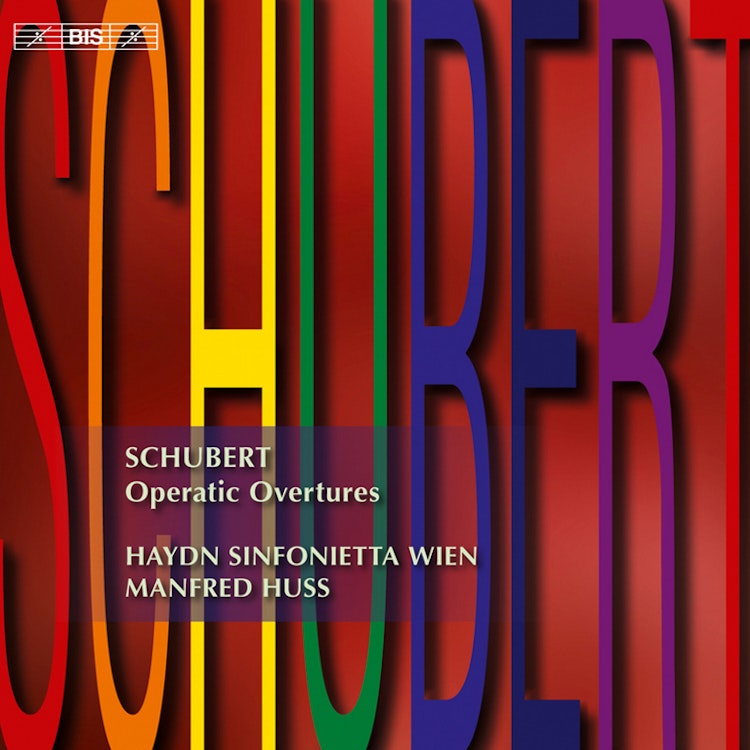
Schubert's stage works, including the operas and overtures on this album, remain largely unknown today and have not entered the standard repertoire of opera companies or symphony orchestras.
Interpretation
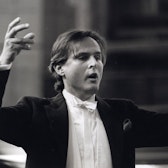
The Haydn Sinfonietta Wien, founded by Manfred Huss, performs on period instruments and is considered a leading interpreter of Viennese Classical and early 19th-century music.
Compositional Technique
Schubert's orchestral instrumentation was distinct from Beethoven's, using it to express moods, feelings, and psychological characterization, and directly led to the highly Romantic sound of Wagner and Liszt.
Historical Context
A 'Rossini craze' swept Vienna in 1821, influencing fashion and prompting Schubert to compose overtures 'in the Italian style,' after the Hofoper was leased to influential Italian impresario Domenica Barbaja.
Composer Biography
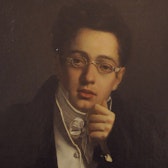
Antonio Salieri, a renowned Italian composer, recognized Schubert's exceptional talent and taught him free of charge, instructing him to study Italian operas and his own works.
Compositional Technique
Schubert's opera overtures possess a stirring dramatic character not found in his symphonies, while his theatre scores lack the classicistic construction of his symphonic movements.
Composer's Artistic Vision
Schubert's opera music, though less 'catchy' than his contemporary Carl Maria von Weber, is considered more profound and prophetic, foreshadowing composers like Liszt and Mahler.
You might also enjoy...
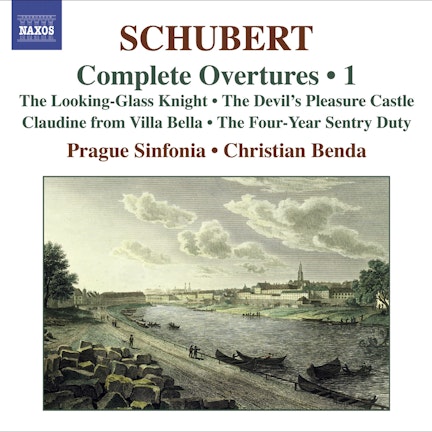
Schubert, F.: Overtures (Complete), Vol. 1
Schubert, F.: Overtures (Complete), Vol. 2
Schubert: Overture in C Major, "In the Italian Style" / Symphony No. 8, "Unfinished" (Orchestral Favourites, Vol. 25)
Schubert: Orchestral Favourites, Vol. 15
Schubert: Overtures
Schubert: Concert Overtures/Symphony No. 5
Schubert: Overture from Der vierjährige Posten, D. 190
Schubert: Overture to Rosamunde
Schubert: Overtures
Schubert: Rosamunde Complete Incidental Music
Schubert, F.: Rosamunde (Excerpts)
Schubert: Rosamunde & Ouvertüre zu "Die Zauberharfe"
Schubert: Rosamunde & Ouvertüre zu "Die Zauberharfe"