Schubert: Piano Sonata in G Major, Op. 78 & 4 Impromptus, Op. 90
9/1/2015, 8 Tracks, 1:12:32
Featuring
Daniel Levy
Franz Schubert
Did you know?
1/7
Critical Reception
Robert Schumann, a German composer and influential music critic, described Schubert's G Major Sonata as "the most perfect in form and spirit."
Compositional Technique
Schubert's Four Impromptus, D. 899, written in 1827, are characterized by a 'pure lyrical essence' and an ethereal cleanliness of material, where structure merges with expression.
Composer's Artistic Vision
Schubert was among the first composers to critically challenge strict compositional laws, proposing softer harmonic movements between adjoining degrees instead of traditional key-dominant opposition.
Critical Reception
The publisher Haslinger titled the first edition of Schubert's G Major Sonata as 'Fantasia, Andante, Menuetto und Allegretto,' suggesting an autonomy between its movements.
Performer Biography
Daniel Levy, the pianist on this album, is considered a significant exponent of the Vincenzo Scaramuzza school, a renowned Argentine piano pedagogy.
Composer Biography
Franz Schubert, born in Vienna in 1797, died at the age of 31, leaving behind about a thousand works across various genres.
Composition History
Schubert's Sonata in G Major, D. 894, composed in October 1826, was dedicated to his old friend Josef von Spaun, one of his most faithful supporters.
You might also enjoy...
Schubert: Piano Music
Schubert: Four Impromptus & Sonata in G
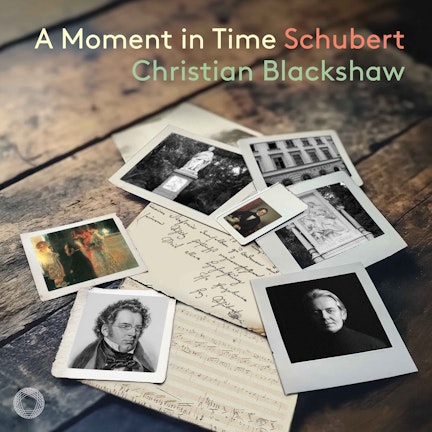
A Moment in Time
Schubert : Piano Sonata No.21 & 4 Impromptus
Schubert: Late Piano Works
Schubert: Impromptus, Op.142, Sonata D894
Schubert - Klaviermusik
Schubert: Impromptus D 899, Sonate D 960
Schubert: Piano Sonata No. 21 / 4 Impromptus, Op. 09
Schubert: Piano Sonata in B-Flat Major, D. 960 & 4 Impromptus, D. 935
Franz Schubert (Sonate B-Dur, D 960 - Vier Impromptus, D 935)