Many of Schubert's piano sonatas, across all creative phases, exist as incomplete pieces, unfinished movements, or fragmentary sketches, making an exact count of his sonata output a 'tricky jigsaw puzzle'.
Compositional Technique
Unlike Beethoven, Schubert's piano sonatas often feature a flowing, associative narrative style, where strict architectural principles recede into the background.
Composer Biography
As a teenager, Franz Schubert felt a vocation for opera, but later acknowledged he had nothing to rival the popular 'Rossini fever' of his time.
Critical Reception
The Sonata in C major, D840, was mistakenly believed by its first editor, Friedrich Whistling, to be Schubert's last sonata, leading him to give it the 'pathos-laden name of Reliquie (Relic)'.
Composer's Artistic Vision
Schubert's creative originality first fully expressed itself in art songs, leading him to be known as the 'King of Song' and to create his own musical 'free state'.
Performer Biography
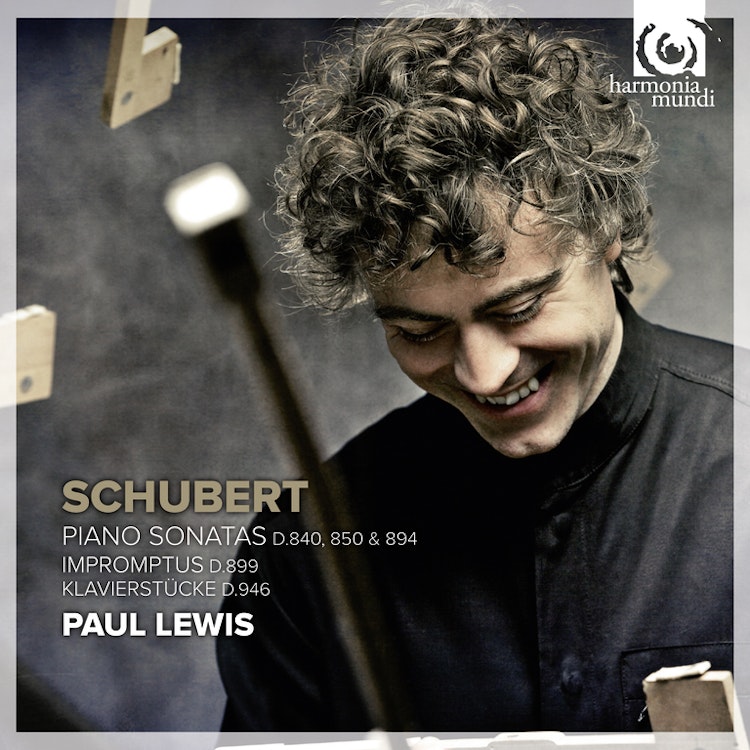
Paul Lewis, the pianist on this album, studied with Joan Havill and later privately with Alfred Brendel, a renowned pianist.
Composition History
The publisher Tobias Haslinger gave Schubert's Sonata in G major, D894, the ambivalent title 'Fantasia or Sonata' in its 1827 edition, reflecting uncertainty about its form.
You might also enjoy...
Schubert: The Complete Piano Works for 2 Hands, Vol. 5
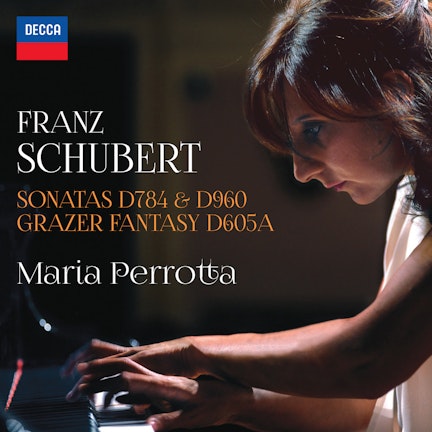
Schubert: Sonatas D784 & 960 - Grazer Fantasy D605A
Schubert: The Secret Melody
Schubert: Piano Sonatas, D. 537 and 664 / 'Wanderer Fantasy'
Schubert: Piano Sonatas, Vol. 1
Schubert: Piano Sonatas Nos. 2, 3 and 6
Schubert: Piano Works
Schubert: Piano Sonatas Nos. 4 & 13 - Wanderer Fantasy